
The concept of parallel universes has long been relegated to the domain of science fiction and speculative philosophy. However, as our observational toolkits have advanced from crude terrestrial telescopes to ultra-sensitive satellite observatories mapping the deepest remnants of the ancient cosmos, physicists have begun noticing anomalies that cannot easily be explained by our standard, isolated model of the universe. The foundational premise of modern cosmology assumes that our universe is homogeneous and isotropic on its largest scales—meaning it looks roughly the same in every direction. Yet, precise mappings of the Cosmic Microwave Background (CMB), the residual thermal echo left behind by the Big Bang, have revealed strange, cold, and asymmetrical structures that hint at external gravitational influences acting from beyond the boundary of our observable horizon.
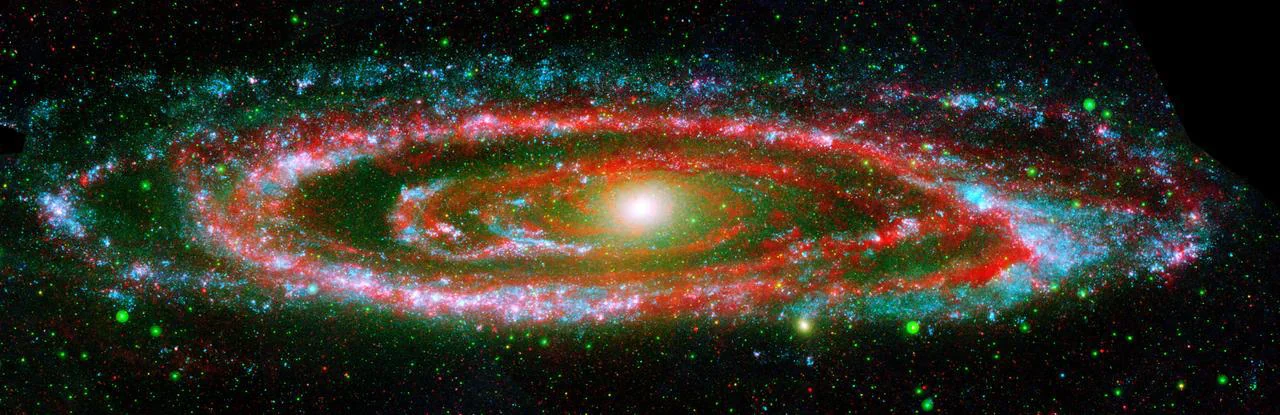
Rather than existing as a singular, self-contained bubble of space and time, theoretical physicists increasingly model our cosmos as part of a vast, interconnected, and eternally self-propagating multiverse. Under this paradigm, our Big Bang was not the absolute beginning of everything, but rather a highly localized event within a broader, multi-dimensional expanse. Different physics, varying fundamental constants, and entirely separate dimensions could be flourishing just beyond our field of view. The hunt is no longer just mathematical; researchers are actively looking for concrete, empirical scars etched into the background radiation of our sky that could prove our universe has physically bumped into another universe.
The idea of eternal inflation, first proposed by Alan Guth and later developed by Andrei Linde, provides a natural mechanism for the generation of a vast multiverse. In this framework, the inflaton field—a hypothetical scalar field that drove the rapid expansion of the early universe—does not decay uniformly. Instead, quantum fluctuations cause it to continue inflating in certain regions while ceasing in others, creating bubble universes. Each bubble is a self-contained universe with its own physical constants and laws, separated by ever-expanding inflationary space. This scenario is not just a mathematical curiosity; it is a direct prediction of many inflationary models, and it suggests that the multiverse is an inevitable consequence of the physics that gave birth to our universe.
The CMB Cold Spot and the Hypothesis of Cosmic Bruising
The most prominent and highly debated empirical clue pointing toward an external universe is the famous ‘CMB Cold Spot.’ Discovered during comprehensive mapping sweeps by NASA’s WMAP and verified with extreme accuracy by the European Space Agency’s Planck satellite, this region represents a massive, anomalous void in the constellation Eridanus. The Cold Spot is significantly larger and drastically colder than standard inflationary physics allows. Under typical models of the early universe, temperature fluctuations in the plasma background should follow a predictable Gaussian distribution. The Cold Spot completely violates these statistical boundaries, defying simple explanation through local cosmic structures or intervening supervoids.
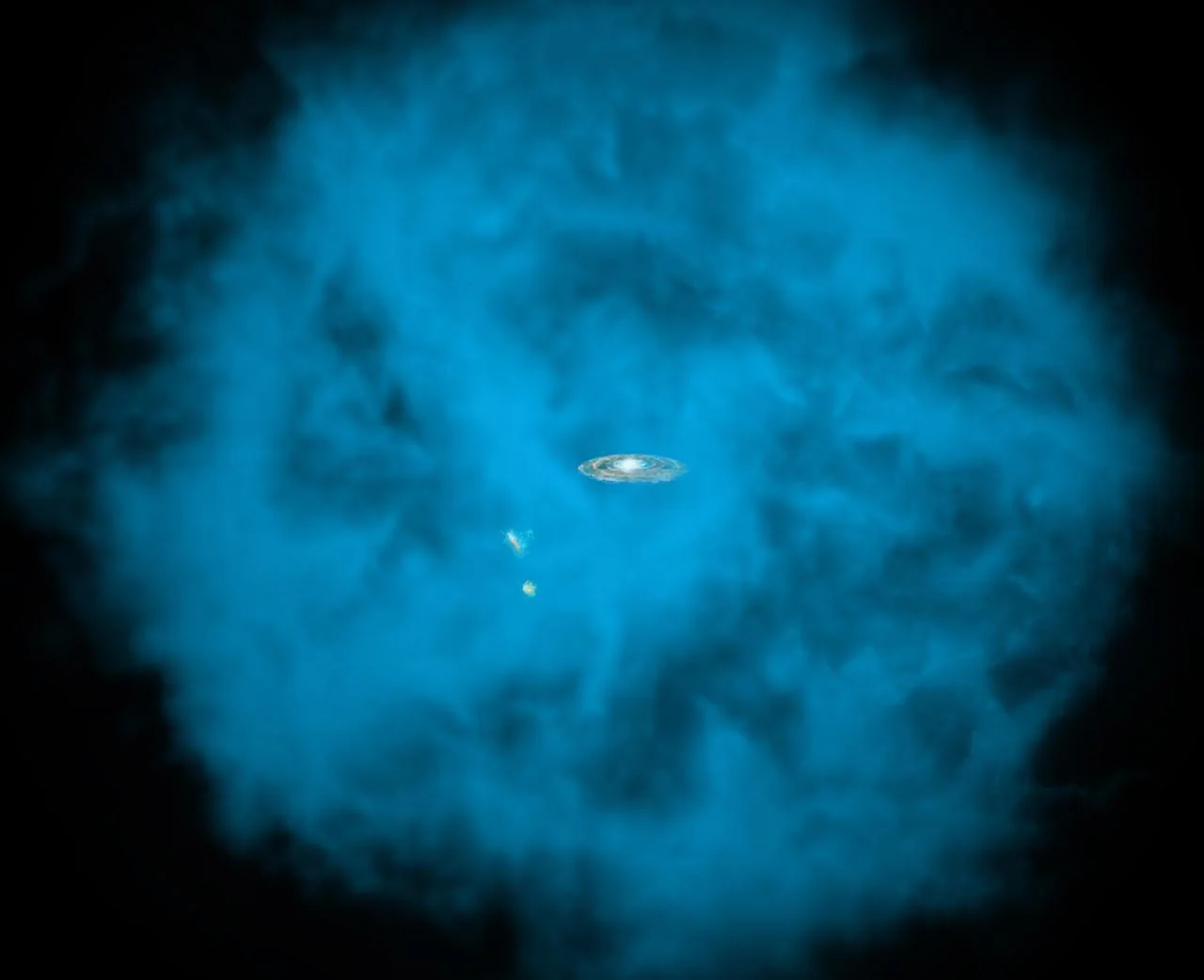
One of the most compelling explanations put forth by theoretical cosmologists is the ‘Cosmic Bruise’ hypothesis. This theory states that during the hyper-accelerated phase of cosmic inflation immediately following our Big Bang, our expanding bubble universe physically collided with an adjacent bubble universe floating within the same higher-dimensional inflationary space. Such a collision would generate a massive quantum mechanical shockwave, displacing matter and casting a permanent gravitational shadow. This shadow would manifest precisely as a colossal, non-standard drop in temperature within the cosmic microwave background. If confirmed by upcoming polarization mapping missions, this thermal anomaly would serve as the very first direct physical signature of an architecture outside our own universe.
Critics of the Cosmic Bruise hypothesis argue that the Cold Spot might be explained by the Integrated Sachs-Wolfe effect caused by a large supervoid—a massive underdensity in the distribution of galaxies—lying along the line of sight. However, recent studies have shown that the Cold Spot’s depth and angular extent are too large to be accounted for by any known supervoid, even the largest ones observed. This leaves the collision hypothesis as the most viable physical explanation, though it remains controversial. Ongoing observations with the Simons Observatory and the CMB-S4 project aim to resolve this issue by providing higher-resolution maps that could distinguish between a void-induced signal and a primordial collision imprint.
Quantum Mechanics and the Many-Worlds Landscape
While cosmologists look to the edges of the observable sky for signs of parallel structures, quantum physicists look down into the subatomic realm. The Many-Worlds Interpretation (MWI) of quantum mechanics, originally formulated by Hugh Everett III, removes the messy concept of wave function collapse. In standard quantum theory, particles exist in a superposition of multiple states until they are observed, at which point they collapse into a single reality. MWI suggests that the wave function never actually collapses. Instead, every single time a quantum event has multiple potential outcomes, the universe splits. Both outcomes happen, but in entirely separate, non-communicating branches of an ever-expanding, multi-universal quantum wavefunction wavescape.
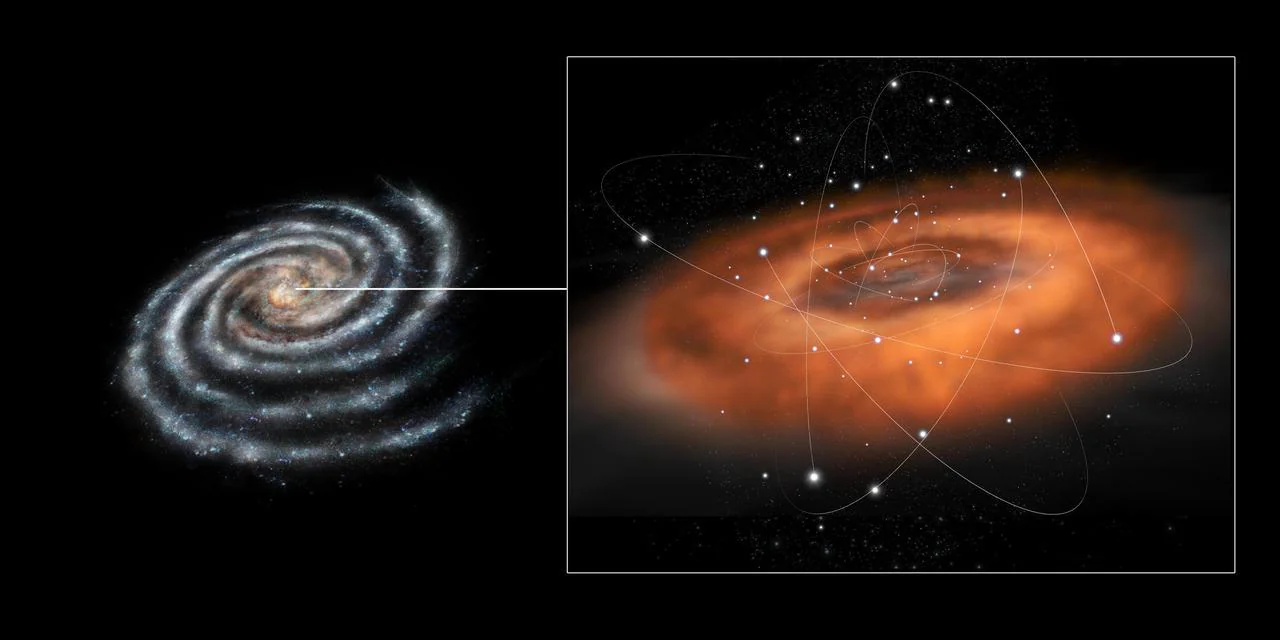
The Many-Worlds Interpretation is not merely a philosophical stance; it has profound implications for quantum computing and the fundamental nature of information. In a branching universe, quantum decoherence ensures that each branch evolves independently, with no possibility of interference. This has led to the development of quantum algorithms that exploit the parallelism of branching to solve problems that would be intractable on a classical computer. While we cannot communicate with or observe other branches, the mathematical consistency of MWI has made it a favorite among physicists who seek a fully deterministic framework for quantum mechanics, free from the ambiguities of measurement-induced collapse.
Classification of Multiverse Models and Observational Indicators
| Multiverse Classification | Theoretical Origin | Spatial/Dimensional Nature | Primary Observational Clue |
|---|---|---|---|
| Level I: Quilted Multiverse | Infinite spatial expansion following standard chaotic inflation. | Identical 3D space extending infinitely beyond our cosmic horizon. | Statistical repetitions in deep cosmic matter distribution patterns. |
| Level II: Bubble Universes | Eternal Inflationary field mechanics halting locally. | Isolated pockets separated by hyper-expanding inflationary space. | The CMB Cold Spot; localized directional asymmetries in radiation. |
| Level III: Many-Worlds | Everettian quantum mechanics avoiding wavefunction collapse. | Infinite branching states existing within Hilbert space. | Quantum decoherence rates and advanced computing interference. |
| Level IV: Brane Multiverse | M-Theory/String theory higher-dimensional bulk systems. | Parallel 3D branes separated along a higher 5D bulk axis. | Microscopic leakage of gravitational force; anomalies in graviton tracking. |
Dark Flow: Matter Drifting Toward the Unknown
Adding fuel to the multiverse discussion is the discovery of an unexplained phenomenon known to astrophysicists as ‘Dark Flow.’ By examining the motion of distant galaxy clusters using the kinematic Sunyaev-Zel’dovich effect, researchers noted that a vast network of galactic clusters appears to be drifting at immense speeds in a highly synchronized, uniform direction. This massive flow points toward a specific patch of the sky between the constellations Centaurus and Hydra. Crucially, this motion cannot be explained by any visible or inferable distribution of matter within our observable universe, as there are no superclusters or gravitational focal points large enough to induce such a sweeping velocity trajectory across millions of light-years.
This implies that the driving source behind this monumental drift sits squarely outside our observable universe. Under standard cosmological constraints, matter outside our horizon shouldn’t exert such a clean, directional pull unless it belongs to an asymmetrical structure formed before inflation or reflects the profound gravitational pull of an entirely separate universe pulling on the edges of our cosmic bubble. This massive celestial conveyor belt strongly suggests that our universe is open, leaking energy or interacting gravitationally with an external environment that classical astronomy is fundamentally blind to seeing directly.
The Dark Flow discovery has been met with both excitement and skepticism. Some researchers have argued that the effect could be an artifact of the peculiar motion of our own galaxy or systematic errors in the data processing. However, multiple independent analyses using different data sets have confirmed the existence of a bulk flow that extends beyond the boundaries of the Sloan Digital Sky Survey and other large-scale surveys. If Dark Flow is indeed real, it would be a direct violation of the Cosmological Principle—the assumption that the universe is homogeneous and isotropic on the largest scales—and would provide some of the strongest evidence for physics beyond the standard model of cosmology.
Frequently Asked Questions
If parallel universes exist, can we ever travel between them?
According to Level II (Bubble) and Level III (Many-Worlds) models, direct travel is physically impossible. The spaces between bubble universes are expanding faster than the speed of light, and quantum branches are completely decoupled through decoherence, making physical transition unachievable under current laws.
Could the CMB Cold Spot just be a massive statistical fluke?
Yes, there is roughly a 1% to 2% probability that the Cold Spot is a rare but natural random fluctuation within standard single-universe inflation. Cosmologists require further polarization data from next-generation observatories to conclusively rule out a fluke.
How does gravity leak between parallel dimensions in string theory?
In string theory, particles like photons and electrons are open strings tied down to our three-dimensional ‘brane.’ Gravitons, however, are closed loops of string. Unbound by membranes, they can freely propagate into the higher-dimensional ‘bulk,’ potentially leaking gravitational energy to or from adjacent parallel branes.
What evidence would definitively prove the multiverse?
A definitive proof would require either detection of a CMB collision imprint with a characteristic statistical signature, observation of gravitational waves with anomalous polarization patterns, or measurement of fundamental constants that show spatial variation across the observable universe, indicating they originate from different vacuum states.