

When a rocket as massive as SpaceX’s Starship is loaded with fuel, it doesn’t just get heavier—it physically transforms. If you stood at the base of the orbital launch mount at Starbase during tanking procedures, you would hear the skyscraper-sized hull groaning, creaking, and popping. This isn’t a sign of structural failure. It is the sound of a 390-foot stainless steel stack dynamically adjusting to a brutal thermodynamic reality: thermal contraction.
Long before the engines ignite, the entire vehicle visibly settles, losing up to a foot of height. Managing this sudden structural shift on the pad is one of the most underappreciated triumphs of modern aerospace engineering.
The Cryogenic Shock: Why Bare Steel Shrinks
To lift its massive payload into orbit, Starship relies on super-chilled, densified liquid oxygen and liquid methane. These propellants are pumped into the tanks at temperatures plunging below minus 250°F (and as low as minus 340°F for sub-cooled liquid oxygen).
While traditional rockets like the Saturn 5 relied on thick layers of orange spray-on foam insulation to isolate these freezing liquids, Starship is completely naked. To save weight and survive the punishing 2,600°F heat of atmospheric re-entry, SpaceX opted for an uninsulated hull constructed from a custom formulation of 304L stainless steel.
Stainless steel is a marvel at cryogenic temperatures—unlike carbon fiber or aluminum, which become brittle in extreme cold, 304L steel actually gains up to 65% more tensile strength and toughness when frozen. However, bare steel is highly conductive and suffers from a notable coefficient of thermal expansion and contraction.
When millions of pounds of cryogenic fluid flood the tanks, the metal atoms lose thermal energy, drawing closer together. Across a 390-foot vehicle, this cumulative atomic shrinkage causes the entire rocket to structurally shorten by several inches to nearly a foot in less than 90 minutes.
The Internal Maze: Preventing Plumbing Disasters
If Starship were a simple, uniform tube, uniform shrinking wouldn’t be a critical danger. But the interior of a rocket is an intricate maze of rigid bulkheads, high-pressure liquid transfer lines, and a massive central downcomer pipe passing through the liquid oxygen tank to feed the Raptor engines below.
As fuel loading progresses, localized sections of the rocket cool down at entirely different rates:
- Thermal Gradients: The lower liquid oxygen tank fills first, rapidly chilling the bottom half of the rocket while the top methane tank remains at ambient Texas summer temperatures.
- Structural Stress: This severe temperature mismatch creates intense localized thermal shock. The freezing section of the hull tries to contract, while the warm section fights to stay the same size, threatening to buckle the thin steel skin or tear welded joints apart like paper.
To stop the rocket from crushing its own internal organs, SpaceX utilizes heavy-duty bellows integrated directly into the plumbing lines. These components act like high-pressure metal accordions. They can compress, flex, and elongate by several inches, maintaining a perfect, leak-proof seal even while under thousands of pounds of pressure as the surrounding structure moves around them.
The Mechazilla Dance: Tracking a Shifting Rocket
The structural movement doesn’t just affect the vehicle internally; it creates a mechanical nightmare for the ground support equipment on the launch tower.
The massive quick-disconnect (QD) umbilical arms on the Mechazilla launch tower must remain securely locked onto the rocket’s fill ports to continuously feed fuel and electricity right up until the moment of liftoff. If the alignment between the tower and the rocket shifts by even a fraction of an inch, the pressurized cryogenic seals will breach, resulting in an immediate abort or a catastrophic fire on the pad.
Because the rocket’s ports physically drift downward as the vehicle shrinks and settles under the weight of the fuel, the tower’s umbilical arms cannot be rigid. SpaceX engineered counter-weighted tracking systems and built-in mechanical compliance directly into the QD arms. This allows the ground equipment to gently and dynamically ride the rocket downward, tracking its shifting shape in real-time.
The Heat Shield Secret: Closing the Gaps
The most brilliant piece of engineering related to this shape-shifting phenomenon is located on the belly of the spacecraft. Starship’s windward side is covered in thousands of black hexagonal ceramic tiles designed to insulate the steel hull during re-entry.

Warm (On the Pad)      =======>      Cryo-Fueled (Ready for Launch)
[ Tile ]  <-- Gap -->  [ Tile ]      [ Tile ][ Tile ] <-- Gaps Closed
==============================      ========================
    Warm Steel Skin                     Contracted Steel Skin
Unlike the stainless steel hull, these ceramic tiles do not expand or contract significantly when exposed to temperature changes. This creates a dangerous material mismatch:
- If the tiles were installed perfectly flush against one another at room temperature, the shrinking steel hull beneath them during fueling would force the tiles to crowd together, crushing their edges and causing them to pop off before launch.
- To prevent this, engineers install the tiles with precise, calculated gaps between them.
While these gaps are primarily engineered to give the steel skin room to expand under the terrifying plasma heat of re-entry without cracking the ceramics, they serve a dual purpose on the pad. As the cryogenic fuel chills the vehicle and the steel skin contracts, the tiles safely shift closer together, closing the gaps and securing the heat shield just in time for flight.
A Hull That Breathes With Physics
Every time you watch a Starship countdown and see dramatic plumes of white oxygen vapor venting into the atmosphere, you are watching a machine operating at the absolute limits of thermodynamics.
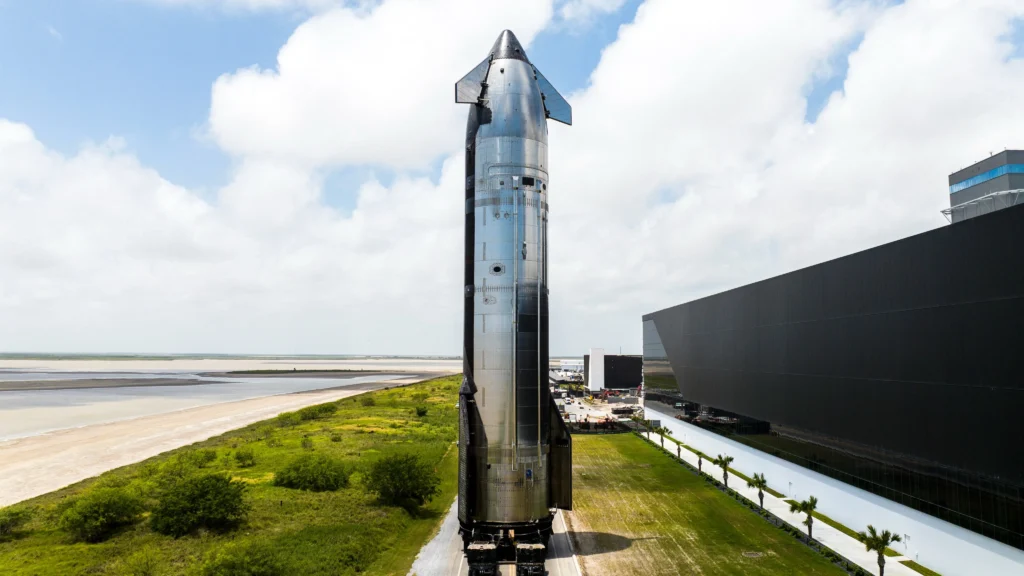
By discarding heavy, traditional insulation, SpaceX chose to build a rocket that actively breathes, settles, and alters its physical shape before it ever leaves Earth. Conquering the microscopic movements of metal under extreme thermal stress is the hidden engineering triumph that allows Starship to stand tall as the most dynamic, powerful architecture in spaceflight history.
Frequently Asked Questions
Does Starship actually shrink on the launchpad, or is that an exaggeration?
It is completely literal. Because Starship’s hull is made of bare metal without insulation, the extreme cold of the cryogenic fuel causes the steel to thermally contract. Across the entire 390-foot height of the rocket, the stack structurally shortens and settles by several inches to nearly a foot over the course of a 90-minute fueling window.
Why doesn’t SpaceX just use spray-on foam insulation like other rockets?
Traditional rockets, like the Saturn 5 or the Space Shuttle’s external tank, used foam insulation to keep fuel cold and prevent ice buildup. However, foam adds dead weight, degrades over time, and poses a severe debris risk during launch and re-entry. Because Starship is designed for rapid, full reusability, a bare steel hull is a much cleaner, lighter, and safer solution for surviving the absolute fire of atmospheric re-entry.
What kind of steel is Starship made of, and why was it chosen?
Starship is built out of a custom formulation of 304L stainless steel. While most materials (like carbon fiber or certain aluminum alloys) become dangerously brittle and fragile when exposed to deep-space or cryogenic cold, 304L stainless steel actually becomes tougher. Its ductility and tensile strength increase by up to 65% at ultra-low temperatures.
Why don’t the black heat shield tiles crack or fall off when the rocket shifts?
The thousands of hexagonal ceramic tiles on Starship’s belly do not expand or contract in the cold like the steel hull does. If they were mounted completely flush at room temperature, the shrinking steel during fueling would force the tiles to crush into each other and pop off. To prevent this, engineers install them with precise, calculated gaps. When the rocket chills down, the steel contracts and the tiles safely shift closer together. These same gaps also give the steel room to expand later when facing the 2,600°F plasma heat of re-entry.
How does the internal plumbing survive this movement without leaking?
If the internal fuel lines were completely rigid, the shifting hull would snap them like twigs. To solve this, SpaceX integrates heavy-duty metal bellows into the plumbing and central downcomer lines. These act like high-pressure metal accordions, allowing the pipes to compress, expand, and flex by several inches while maintaining a flawless, leak-proof seal under immense pressure.
Does the launch tower have to move with the rocket as it shrinks?
Yes. The massive quick-disconnect (QD) umbilical arms on the Mechazilla launch tower supply fuel, power, and data lines to the rocket. Because the vehicle’s fuel ports physically drift downward as the rocket settles, the tower arms are engineered with counter-weighted tracking systems and built-in mechanical compliance. This allows the ground equipment to gently “ride” the rocket downward to maintain a perfect seal up until the final seconds of the countdown.