
For decades, classical astrophysics presented a relatively straightforward trio of choices for the ultimate fate of our universe: the Big Freeze, the Big Crunch, or the Big Rip. These scenarios depended entirely on the precise cosmic density parameter and the behavior of dark energy. In the traditional Big Freeze scenario, the universe expands indefinitely, pulling galaxies apart until stars exhaust their nuclear fuel, leaving behind cold stellar remnants fading into absolute thermodynamic equilibrium. The Big Crunch posited that gravitational attraction would eventually halt and reverse this expansion, collapsing all matter back into a singular, high-density fiery crucible. Meanwhile, the Big Rip predicted that an aggressively accelerating dark energy curve would eventually tear apart galaxies, solar systems, planets, and even subatomic particle bonds down to the fabric of spacetime itself.
However, recent high-precision observational data from deep-space telescopes and advanced cosmological simulations indicate that the end of our universe may be far stranger, more chaotic, and fundamentally less predictable than these linear models imply. The discovery of potential shifts in the state of dark energy over deep time suggests that the fundamental constants driving cosmic acceleration are not truly static. Instead of a smooth, predictable fade into darkness, the cosmos might experience sudden phase transitions, localized dimensional collapses, or exotic quantum fluctuations that could rewrite the laws of physics long before the last star burns out. The modern frontier of theoretical physics is uncovering mechanisms indicating that cosmic doom might not be a slow whimper, but an abrupt, violent rearrangement of existential parameters.
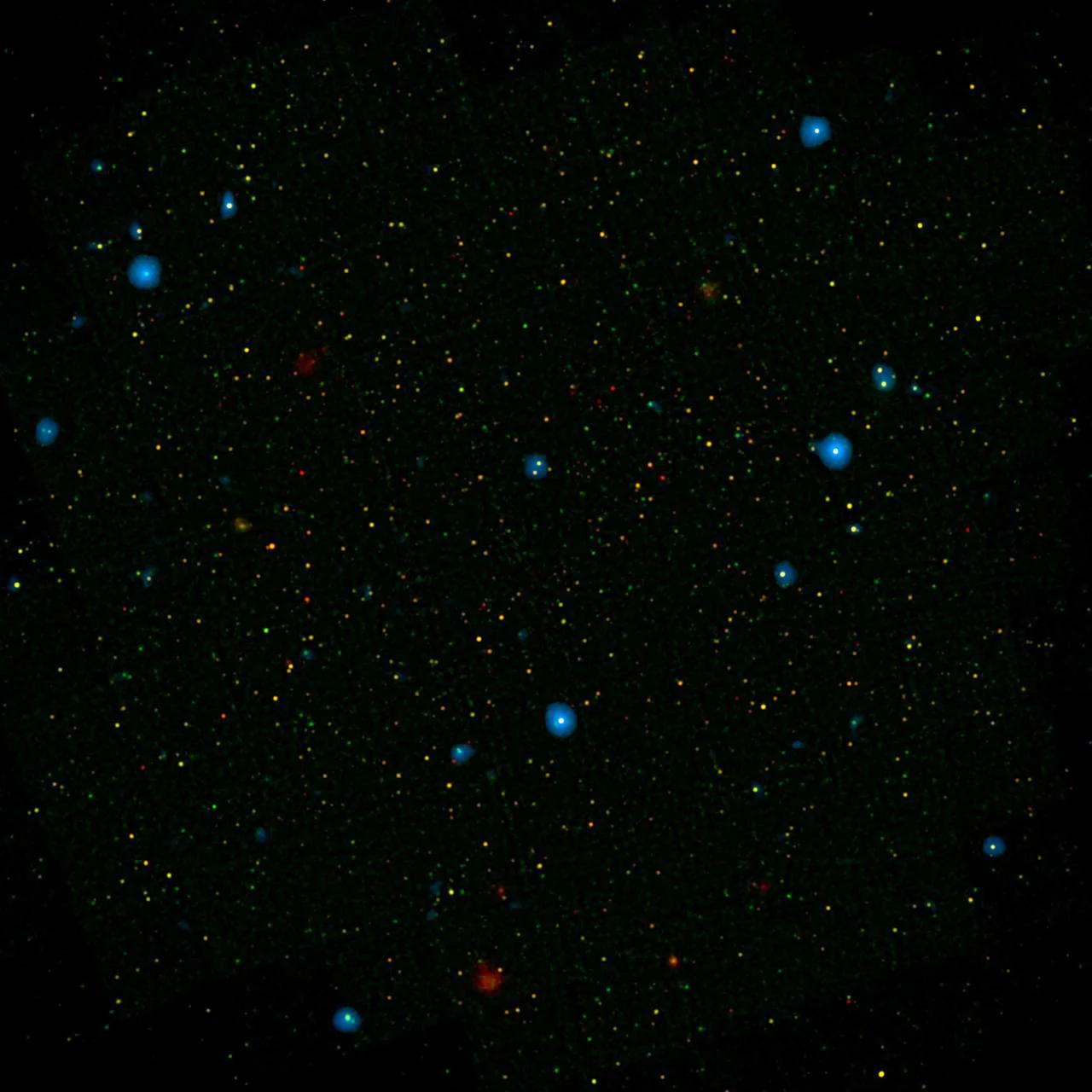
The implications of these discoveries extend far beyond academic curiosity. Understanding the ultimate fate of the universe forces us to reconsider our place within it, challenging the notion that the universe we observe today represents a stable, permanent state of existence. Instead, we are beginning to understand that our cosmos may be merely one phase in an ongoing cosmic evolution, subject to dramatic transformations that could occur on timescales ranging from the immediate cosmic present to incomprehensible eons in the future. The search for clarity in these matters has driven physicists to explore the most extreme corners of quantum field theory, general relativity, and string theory, each offering radically different visions of what the end might look like.
One of the most critical considerations is that our current cosmological models are built upon assumptions that may themselves be incomplete. Dark energy, which constitutes nearly 70% of the universe’s energy density, remains one of the greatest unsolved mysteries in physics. If its behavior deviates even slightly from the simple cosmological constant that Einstein introduced, the entire timeline of cosmic evolution could shift dramatically. For instance, if dark energy exhibits a dynamic equation of state that varies with time or spatial curvature, the expansion history of the universe could accelerate at rates that far exceed current predictions, leading to a scenario where large-scale structures dissolve far earlier than conventional models suggest.
The Threat of Vacuum Decay and the Higgs Metastability Crisis
One of the most unsettling modern theories regarding cosmic termination is the concept of vacuum decay. This hypothesis arises directly from quantum field theory and the measured mass of the Higgs boson. Currently, our universe appears to exist in a state known as a ‘true vacuum’—a configuration where the fundamental quantum fields are at their absolute lowest possible energy state. However, calculations involving the top quark and Higgs boson masses hint at a terrifying alternative: our current universe might actually reside in a ‘false vacuum.’ A false vacuum is a local energy minimum that feels stable to its inhabitants but is inherently metastable, analogous to a ball resting in a shallow depression on top of a mountain peak rather than at the bottom of the valley.
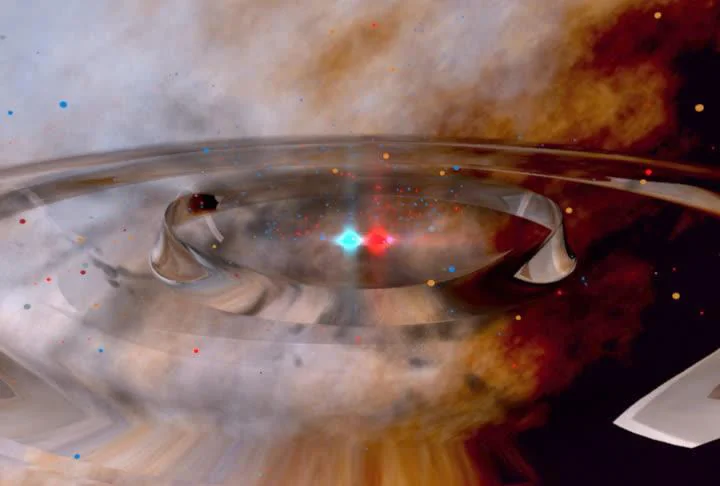
If this metastability holds true, a sufficiently energetic quantum event or a random instance of quantum tunneling could push a single point in space over the energy barrier into the true vacuum state. This transition would trigger the immediate nucleation of a true vacuum bubble. Once formed, this bubble would expand outward in all directions at exactly the speed of light. Inside the bubble, the laws of physics would be completely rewritten: the strengths of fundamental forces would instantly change, atoms would fall apart, and chemistry as we know it would cease to exist. Because the bubble wall propagates at the speed of light, no observer would see it coming. The destruction of the cosmic fabric would be instantaneous, absolute, and utterly impossible to intercept, resetting the local parameters of space to a completely alien state of matter.
The Higgs field’s stability is not merely a theoretical curiosity; it is one of the most pressing questions in modern particle physics. The precise measurements of the Higgs boson mass at the Large Hadron Collider have allowed physicists to calculate the potential energy landscape of the Higgs field with unprecedented accuracy. These calculations, when combined with the top quark mass, strongly suggest that our universe is perched on the edge of instability. The margin between stability and metastability is so narrow that even slight uncertainties in the measured masses could tip the balance one way or the other. This has led to a race among experimentalists to refine these measurements, as the answer could fundamentally alter our understanding of whether the universe we inhabit is a temporary arrangement or a permanent fixture.
Phantom Dark Energy and Spatial Disintegration
Another highly disruptive avenue of inquiry focuses on the exact nature of the cosmological constant. If dark energy is governed by a parameter known as ‘phantom energy,’ where its equation-of-state parameter is less than negative one, the density of dark energy will actually increase as the universe expands. This creates a runaway feedback loop. Instead of maintaining a steady, gentle push against gravity, phantom dark energy grows exponentially more powerful over time, dominating cosmic scales at an accelerating pace. As this phantom density escalates, it successively overcomes the gravitational bindings of massive galaxy clusters, individual galactic disks, stellar orbits, planetary bodies, and ultimately, the electrostatic forces keeping atoms intact. Spacetime itself would essentially stretch to the breaking point, ending in a singularity where the distance between all individual quantum particles becomes infinite.
The phantom energy scenario is particularly alarming because it imposes a finite, and relatively short, deadline on the existence of bound structures. Unlike the Big Freeze, which allows for billions of years of stellar evolution and potential for life to persist in some form, the Big Rip would terminate all organized matter within a few tens of billions of years at most. As the phantom energy density grows, it would first tear apart galaxy clusters, then individual galaxies, then solar systems, and finally planets. In the final moments, the expansion would become so violent that it would overcome the strong nuclear force, dismantling atomic nuclei and leaving behind a soup of fundamental particles hurtling apart at ever-increasing speeds. This is not a slow fading into darkness; it is a catastrophic disintegration of all structure.
Comparative Overview of Ultimate Cosmological End-States
| Scenario | Primary Driving Mechanism | Timeframe Estimate | Ultimate Physical Consequence |
|---|---|---|---|
| The Big Freeze | Constant dark energy density causing indefinite, linear spatial expansion. | 10^14 to 10^100 years | Thermodynamic heat death; stars exhaust fuel; absolute zero isolation. |
| Vacuum Decay | Quantum tunneling of the Higgs field into a lower, true vacuum state. | Stochastic (Any moment to 10^100+ years) | Instantaneous destruction of atomic structure via light-speed bubble wall. |
| The Big Rip | Phantom dark energy density increasing exponentially over cosmic time. | 20 to 50 billion years | Tearing apart of galaxies, planets, atoms, and spacetime geometry. |
| The Big Bounce | Dark energy reversal leading to gravitational contraction and re-expansion. | Cyclical scale (Trillions of years) | Symmetric collapse into a singularity followed by a new Big Bang event. |
The Cosmological Rebound: Cyclical Eternity
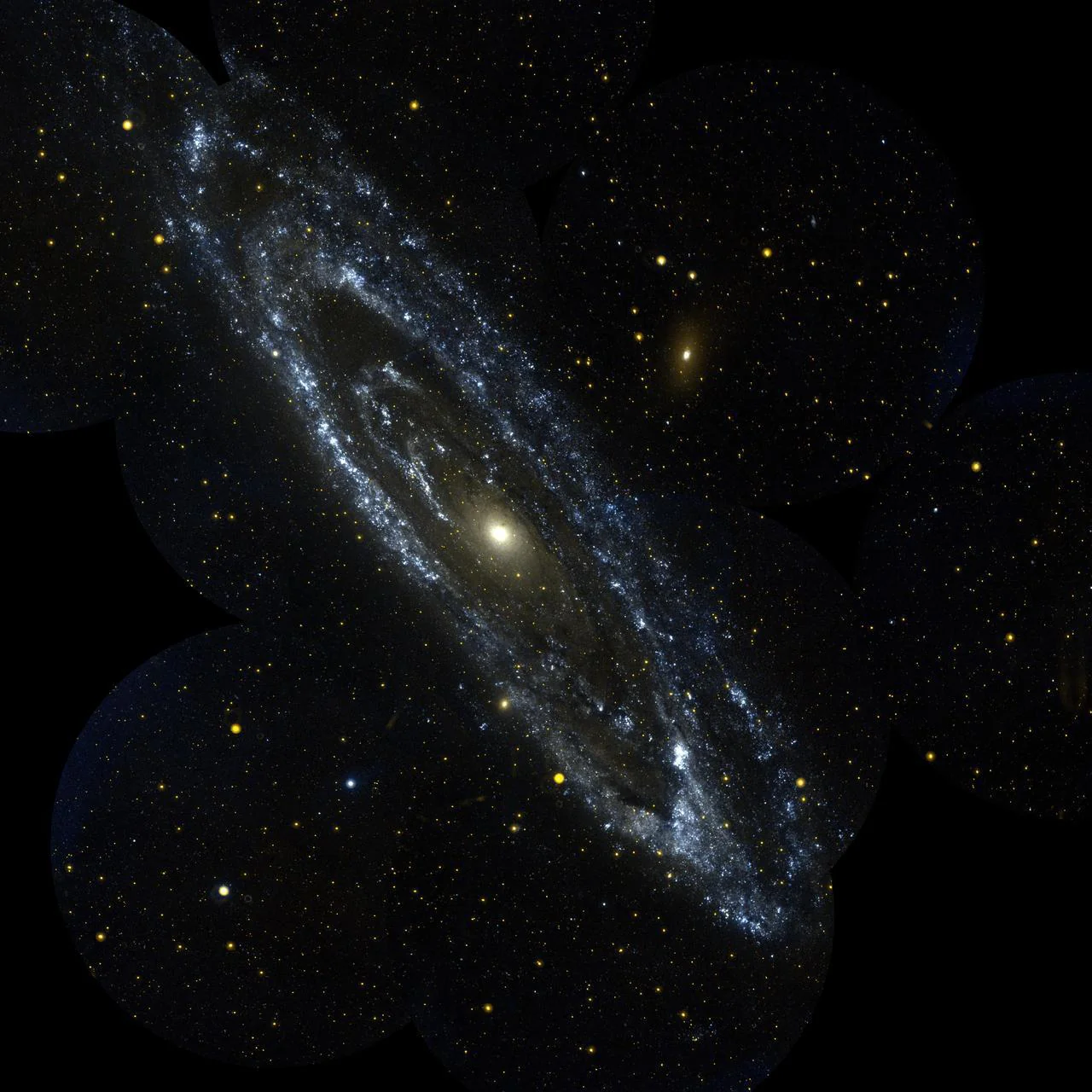
Contrasting the absolute finality of vacuum decay and the Big Rip is the resurgent concept of cyclical cosmology, most prominently articulated through Loop Quantum Cosmology and modern brane-world string theory models. These frameworks argue that what we perceive as the absolute end of the universe might simply be a transitional gateway. In a Big Bounce or cyclical scenario, dark energy does not remain a constant repulsive force indefinitely. Instead, through high-energy scalar field modifications or extra-dimensional interactions, the cosmic acceleration eventually slows down, halts, and reverses into an accelerated contraction phase. As matter, radiation, and empty space compress back down toward a sub-atomic Planck-scale volume, the extreme quantum gravity pressures trigger an immense repulsive force—a cosmic bounce—initiating a brand-new inflationary expansion phase.
This exotic transformation bypasses the traditional concept of an absolute gravitational singularity where mathematics breaks down. Instead of an infinite-density dead end, the universe acts like a cosmic lung, continuously inhaling and exhaling across vast eons of time. This introduces a profoundly strange philosophical shift: our current epoch of stars, planets, and human observation might simply be one brief iteration in an infinite sequence of universes, each rising from the ashes of its predecessor. The end of our universe, under this lens, is merely the labor pains of the next cosmic dawn. Furthermore, these cyclical models often incorporate the idea that physical constants and even the laws of physics might vary from one cycle to the next, leading to an infinite variety of possible universes, some of which might be more hospitable to life than others.
The cyclical hypothesis has gained renewed traction due to advances in quantum gravity, particularly the development of Loop Quantum Cosmology, which successfully resolves the singularity problem without requiring exotic new physics. In these models, the universe reaches a minimum scale before bouncing back, driven by a repulsive quantum geometric force. This bounce is not a one-time event but could repeat indefinitely, creating a series of cosmic cycles. Observational tests of these models are challenging, but some predictions—such as the existence of a slight non-Gaussianity in the primordial gravitational wave background—are within reach of next-generation experiments. If such signatures were detected, they would provide compelling evidence that our universe is not the first and will not be the last.
Frequently Asked Questions
Can human technology or future civilizations prevent vacuum decay?
No. Vacuum decay is a fundamental quantum event that operates at the baseline level of spacetime geometry. The energy required to alter the state of a collapsing quantum field across light-years is infinitely beyond the reach of any physical civilization, and because the bubble propagates at light speed, it cannot be detected prior to arrival.
What is the difference between the Big Freeze and the Heat Death?
The terms are often used interchangeably, but the Big Freeze focuses primarily on the macroscopic expansion that isolates galaxies across immense distances, while Heat Death refers explicitly to the thermodynamic state where entropy reaches its absolute maximum, and no useful thermodynamic work can ever be performed.
How does dark energy density dictate whether a Big Rip occurs?
If dark energy behaves according to Einstein’s cosmological constant, its density remains perfectly uniform as space expands. However, if it is ‘phantom’ energy, its density scales upward alongside spatial growth, steadily accumulating the raw energy density required to violently rip atomic and molecular bonds apart.
Could the universe end in a Big Crunch instead of a Big Rip?
The Big Crunch is now considered highly unlikely given the overwhelming evidence for accelerating expansion. For a Big Crunch to occur, the expansion would need to decelerate and reverse, which would require a negative cosmological constant or a dominant attractive force, neither of which is supported by current data. The Big Crunch remains a theoretical possibility only in alternative gravity models.