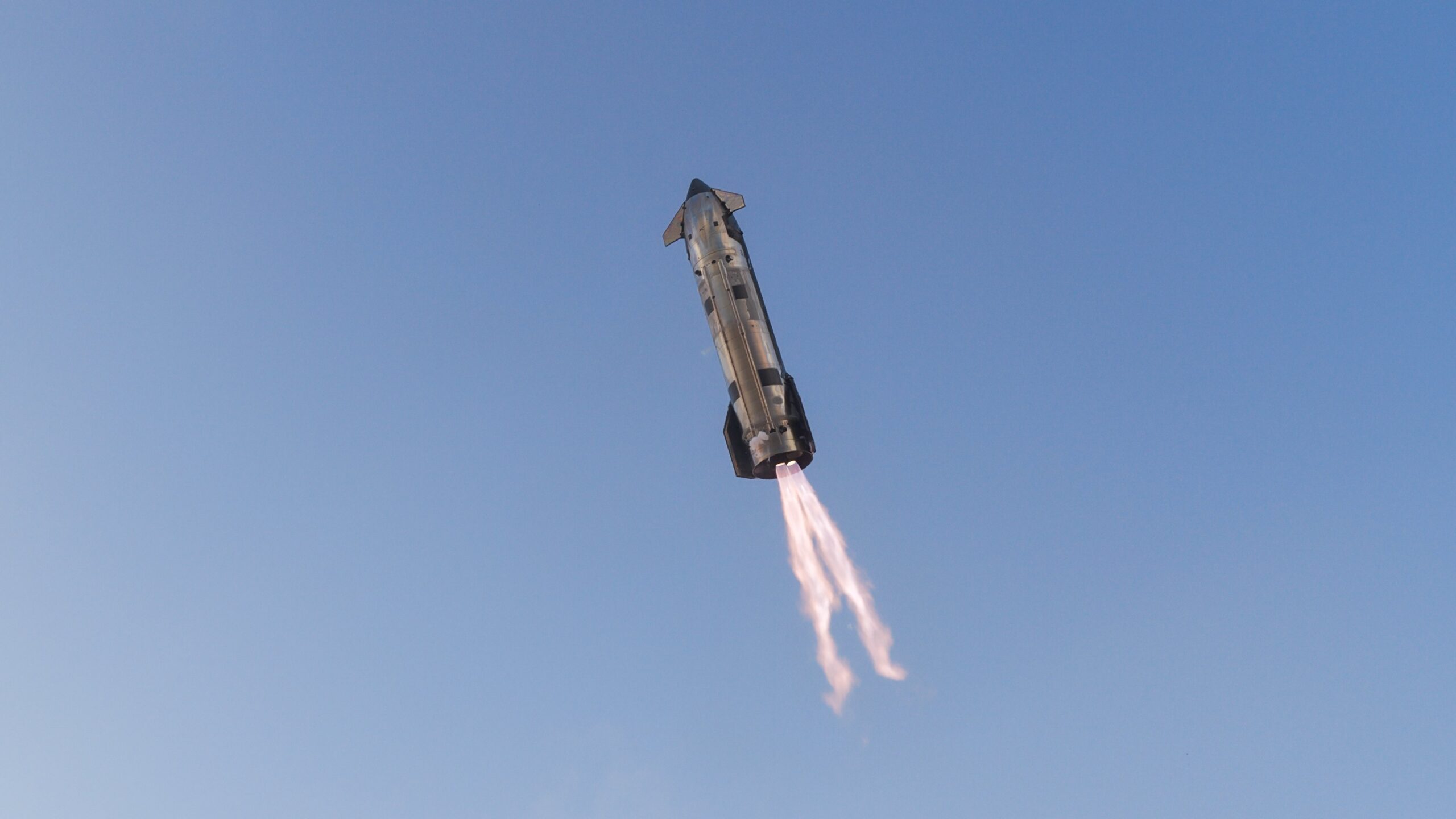

The images of Starship streaking through the atmosphere, glowing like a meteor, are both awe-inspiring and terrifying. They highlight one of the most challenging aspects of space travel: returning home. While it might seem intuitive to just “slow down” before hitting Earth’s atmosphere, the reality of orbital mechanics and physics makes this a monumental, if not impossible, task for Starship and any spacecraft. Let’s dive into why.
The Unseen Energy Burden: Why Speed is Life (and Death)
When Starship is in orbit, it’s not just floating; it’s moving incredibly fast – around 17,500 miles per hour (28,000 km/h). This immense speed isn’t just for show; it’s what keeps it in orbit, constantly falling around the Earth. At this velocity, Starship possesses an enormous amount of kinetic energy. To safely return to Earth, this energy must be shed. Think of it like a bullet fired from a gun; it has to stop somehow.
The most efficient way for Starship to shed this kinetic energy isn’t by firing its engines backward for an extended period – that would require an impractical amount of propellant. Instead, it uses the Earth’s atmosphere as a giant brake pad, converting kinetic energy into heat and sound through friction (drag).
The Thin Blue Line: Atmospheric Drag and Plasma
Our atmosphere, seemingly thin and wispy from space, becomes a dense, unforgiving medium at orbital velocities. As Starship slams into the upper atmosphere, the air molecules it encounters are compressed and heated to extreme temperatures, creating a superheated plasma shockwave around the vehicle. This isn’t just a side effect; it’s the very mechanism by which Starship slows down.
Heat Management: The Ultimate Challenge
The intense heat generated by atmospheric drag is the primary reason for Starship’s elaborate Thermal Protection System (TPS) – the thousands of black ceramic tiles that cover its leeward side. These tiles are designed to ablate (burn away slowly) or radiate heat away, protecting the underlying structure. If Starship tried to “slow down” significantly with engines before entry, it would still need to shed the remaining orbital energy somehow, and the atmosphere remains the most practical means. A gentler entry would mean a longer duration of heating, potentially exceeding the TPS’s endurance.
Aerodynamic Stability: Keeping It Pointed Right
During reentry, Starship isn’t just slowing down; it’s also carefully controlling its orientation. It reenters belly-first at a specific angle of attack, using its body as a blunt heat shield and its flaps for aerodynamic control. This precise attitude management is crucial for generating lift to ‘fly’ through the upper atmosphere, controlling its descent rate, and ensuring a controlled landing trajectory. Trying to significantly alter its speed with engines mid-entry would disrupt this delicate aerodynamic balance and could lead to instability or catastrophic failure.
Orbital Mechanics: It’s Not Like Driving a Car
Leaving orbit isn’t like stepping on the brakes in a car. To slow down significantly in space before atmospheric entry would require a massive “retrograde burn” – firing engines in the opposite direction of travel. The amount of fuel needed for such a burn to reduce orbital velocity to a fraction would be astronomical, far exceeding Starship’s capacity for its current mission profile. Its engines are primarily for orbital maneuvers, propulsive landing, and ascent.
Structural Integrity: Built to Endure, Not to Stop
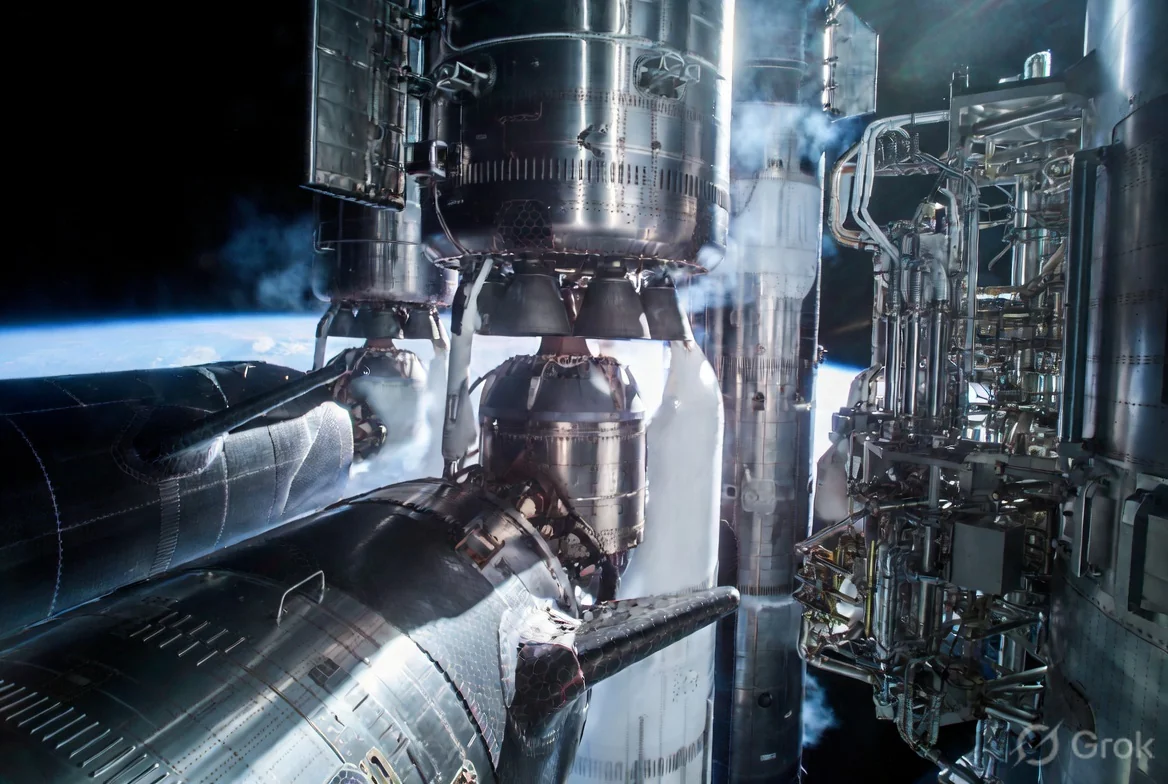
Starship is designed to withstand the immense stresses and temperatures of atmospheric reentry, but there are limits. The structure is optimized for distributing thermal and aerodynamic loads across its broad surface during a relatively quick, albeit violent, deceleration. Attempting to induce a very slow, prolonged deceleration or drastically alter its flight path without relying on aerodynamic braking could subject the structure to unanticipated stresses or thermal soak, potentially leading to failure.
Key Takeaways
- Starship carries an enormous amount of kinetic energy in orbit that must be shed.
- Atmospheric drag is the most efficient and practical method to convert this energy into heat.
- Attempting to ‘brake’ significantly with engines before reentry requires an impractical amount of propellant.
- The reentry process generates extreme heat, necessitating Starship’s advanced Thermal Protection System.
- Precise aerodynamic control and body-flaps are crucial for stable, controlled deceleration.
- Orbital mechanics dictates a high-speed atmospheric entry as the most feasible path.
Conclusion
The idea of Starship simply “slowing down” during reentry might sound appealing, but it fundamentally misunderstands the physics of orbital mechanics and atmospheric braking. The blazing hot, high-speed descent is not a flaw; it’s an incredibly engineered solution to a complex problem. Every piece of Starship, from its robust stainless steel structure to its intricate tile system and precise flight software, is designed to harness the very forces that seem so destructive, turning orbital energy into a controlled, fiery path home. As SpaceX continues to refine Starship, understanding these fundamental principles helps us appreciate the monumental challenges and brilliant engineering behind humanity’s journey to the stars.
Frequently Asked Questions
Q: How does Starship’s reentry differ from the Space Shuttle’s?
A: While both use atmospheric drag, Starship reenters belly-first at a high angle of attack, relying on its body and flaps for control and a propulsive landing. The Space Shuttle reentered with a much shallower glide slope, acting more like an airplane, and landed on a runway. Starship’s high angle reentry generates more drag earlier, helping it decelerate faster at higher altitudes.
Q: Can’t Starship use its engines to slow down just a little bit before hitting the atmosphere?
A: Starship does perform a deorbit burn to adjust its trajectory for atmospheric entry. However, significantly slowing down from orbital velocity purely with engines before entry would consume an enormous amount of propellant, making the mission economically unfeasible and adding unnecessary mass. The atmosphere remains the primary, most efficient braking mechanism for the bulk of deceleration.
Q: What happens if Starship reenters too steeply or too shallowly?
A: Reentering too steeply would cause excessive deceleration and heating, potentially overwhelming the TPS and structural limits, leading to rapid disintegration. Reentering too shallowly could cause the Starship to ‘skip’ off the atmosphere back into space, or prolong the heating phase beyond the TPS’s endurance, leading to a similar destructive outcome. A precise entry corridor is vital.
Q: Why does Starship reenter belly-first instead of nose-first?
A: Reentering belly-first presents the largest possible surface area to the oncoming atmosphere. This maximizes drag, allowing for a quicker deceleration. More importantly, it allows the entire leeward (bottom) side of the vehicle to be covered in the heat-resistant TPS tiles, protecting the vulnerable internal components from the extreme plasma temperatures.
Q: Is the glowing plasma during reentry dangerous for the Starship?
A: The plasma itself isn’t directly ‘dangerous’ in terms of structural damage, but it’s a symptom of the extreme heat that is dangerous. The plasma also causes a temporary communication blackout, as the ionized gas interferes with radio signals, preventing contact with ground control. Starship is designed to operate autonomously during this phase.