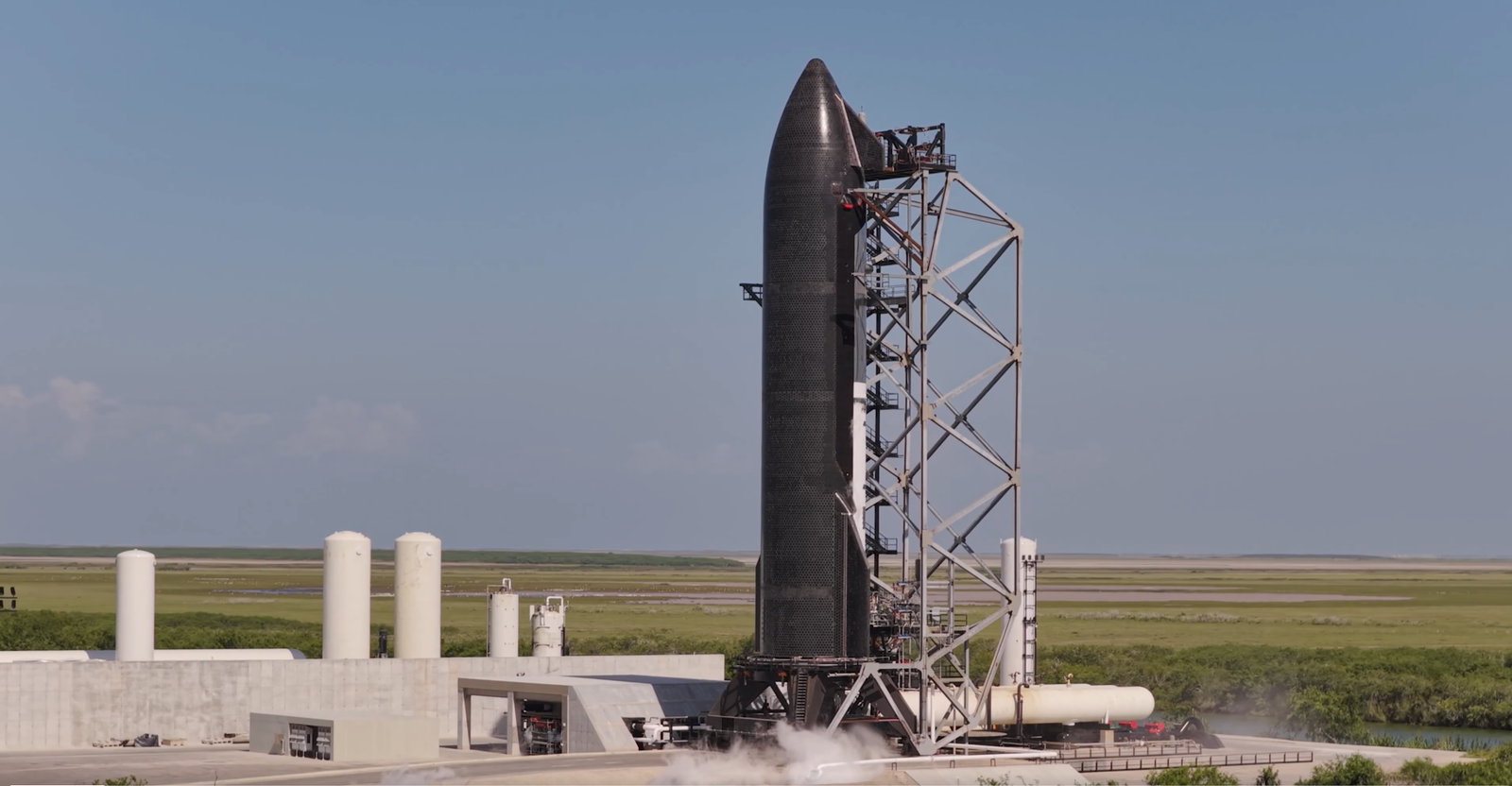

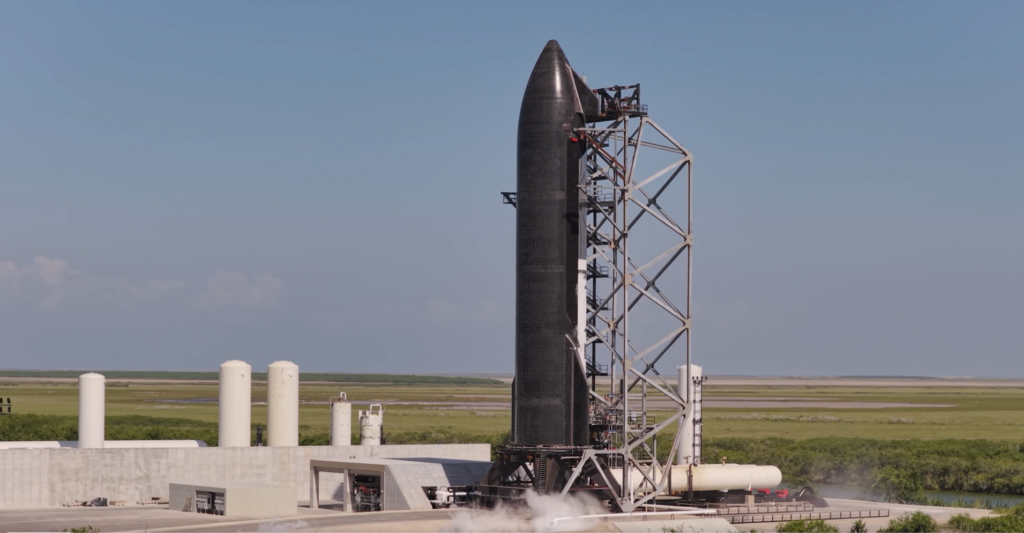
SpaceX has reached another major milestone in the development of its next-generation launch system. At Starbase’s Massey test site, Ship 40 successfully completed a full-duration, 60-second static fire using all six Raptor engines, marking the vehicle’s most demanding ground test before its expected role on Starship Flight 13. The test followed a 15-second single-engine firing conducted only days earlier, showing a deliberate step-by-step expansion of the test campaign. (space.com)
Although the rocket never left the ground, this single minute may determine whether Ship 40 progresses toward flight readiness.
Why 60 Seconds Matters
A static fire is far more than an engine checkout.
During one minute of operation, Starship experiences conditions that closely resemble the first phase of ascent:
- Maximum propellant flow
- High combustion temperatures
- Rapid structural heating
- Intense vibration
- Flight-like software activity
- Continuous health monitoring
Unlike previous short ignition tests, a 60-second burn allows systems to stabilize, revealing problems that may not appear during the first few seconds of operation.
Ship 40’s Test Campaign
| Test | Purpose | Result |
|---|---|---|
| Cryogenic Proof Tests | Verify tank and structure integrity | Completed |
| Igniter Test | Validate ignition hardware | Completed |
| 15-second Single-Engine Static Fire | Verify one Raptor 3 engine and plumbing | Successful |
| 60-second Six-Engine Static Fire | Full propulsion system validation | Successful |
| Booster Testing (Next Step) | Validate Booster 20 | Pending |
Status based on publicly available information as of early July 2026. (nextspaceflight.com)
What Engineers Are Actually Measuring
1. Six Raptors Acting Like One Engine
A Starship upper stage doesn’t simply have six independent engines.
It has:
| Engine Type | Quantity | Primary Role |
|---|---|---|
| Sea-Level Raptor 3 | 3 | Atmospheric ascent |
| Vacuum Raptor 3 | 3 | High-efficiency operation after leaving dense atmosphere |
All six must ignite in a carefully controlled sequence while producing balanced thrust.
Even tiny timing differences create asymmetric forces that can introduce unwanted rotation.
Interestingly, some observers have noted that Ship 40’s ignition sequence appears different from earlier vehicles, potentially reflecting software or startup refinements. This has not been confirmed by SpaceX but has generated technical discussion within the community. (reddit.com)
2. Propellant System Stability
Each Raptor consumes enormous quantities of:
- Liquid Oxygen (LOX)
- Liquid Methane (LCH4)
Engineers monitor:
| Parameter | Why It Matters |
|---|---|
| Tank Pressure | Prevents cavitation |
| Propellant Temperature | Maintains engine efficiency |
| Flow Rate | Ensures stable combustion |
| Valve Timing | Synchronizes engine startup |
| Feed Line Pressure | Prevents combustion instability |
A small pressure oscillation lasting milliseconds can propagate throughout the propulsion system.
3. Thermal Mapping
One minute of continuous firing generates temperatures exceeding 3,000°C inside the combustion chambers, while surrounding hardware experiences rapidly changing thermal loads.
Engineers analyze:
- Engine bay temperatures
- Heat shield performance
- Feed-line heating
- Structural expansion
- Thermal gradients
The objective is not simply surviving the burn but understanding how heat moves through the vehicle.
4. Structural Dynamics
Six Raptors create enormous vibration and acoustic energy.
Sensors distributed throughout Ship 40 measure:
| Measurement | Purpose |
|---|---|
| Acceleration | Structural loading |
| Frequency Response | Resonance detection |
| Strain | Material deformation |
| Acoustic Loads | Hardware survivability |
Computer simulations predict these loads, but only a real static fire provides flight-quality validation.
5. Flight Software Validation
The engines are only half the story.
During the test, Starship’s onboard computers continuously:
- Monitor thousands of sensor channels
- Detect abnormal engine behavior
- Execute automated safety logic
- Coordinate engine operation
- Record high-rate telemetry
This is effectively a rehearsal for launch-day software.
Why the Data Matters More Than the Flames
The visible test lasted only one minute.
The engineering analysis will take days.
Every pressure curve, vibration signature, and temperature profile is compared with digital models. If measured performance matches predictions, engineers gain confidence that Ship 40 will behave similarly during flight. If not, the data points directly to systems requiring further refinement before launch.
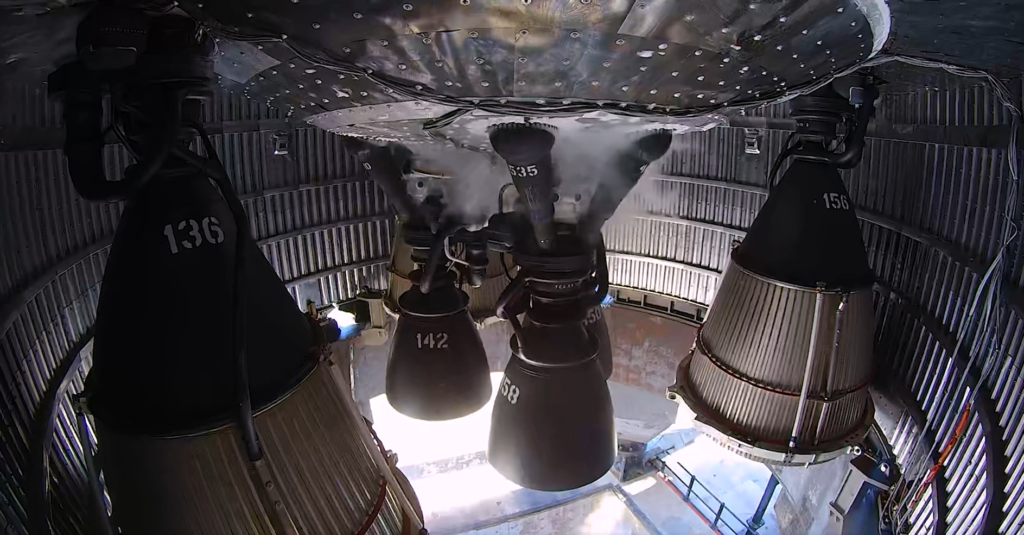
That is why static fires remain one of SpaceX’s most valuable development tools. They transform a spectacular public display into millions of engineering measurements that reduce risk before the vehicle ever leaves the pad. As preparations continue for Flight 13, the information gathered during these 60 seconds may prove far more important than the flames themselves. (space.com)
Frequently Asked Questions (FAQ)
Q1. What is a full-duration static fire test?
A full-duration static fire is a ground test in which Starship’s Raptor engines are ignited while the vehicle remains firmly attached to the test stand. The engines operate for nearly the same length of time as they would during the initial phase of flight, allowing engineers to collect real-world performance data without launching the rocket.
Q2. Why did SpaceX perform a 60-second static fire on Ship 40?
The 60-second burn was designed to validate the integrated performance of Ship 40’s propulsion system, structures, software, and propellant feed systems under launch-like conditions. It provides critical engineering data before the vehicle is considered for flight.
Q3. How many engines fired during the test?
Video footage showed all six Raptor engines igniting during the full-duration test. Ship 40 is equipped with three sea-level Raptor engines and three vacuum-optimized Raptor engines.
Q4. Why was there a single-engine static fire before the six-engine test?
SpaceX follows an incremental testing philosophy. A single-engine firing verifies engine health, plumbing, and ignition systems before progressing to the more demanding six-engine integrated test.
Q5. What data do engineers collect during a static fire?
Engineers analyze thousands of telemetry channels, including:
- Chamber pressure
- Turbopump speed
- Engine thrust
- Propellant flow rates
- Tank pressure
- Vibration levels
- Structural strain
- Thermal performance
- Flight computer status
- Valve timing
Q6. Why does a 60-second burn reveal more than a short test?
Many thermal, vibration, and pressure-related effects only become apparent after engines have been operating continuously for several seconds. A longer burn allows engineers to observe stable operating conditions and detect issues that shorter tests might miss.
Q7. Does a successful static fire guarantee a successful launch?
No. A successful static fire significantly reduces technical risk, but launch introduces additional factors such as liftoff dynamics, stage separation, atmospheric loads, and reentry conditions that cannot be fully replicated during ground testing.
Q8. What is the difference between sea-level and vacuum Raptor engines?
Sea-level Raptors have smaller nozzles optimized for Earth’s atmosphere, while vacuum Raptors use much larger expansion nozzles to maximize efficiency in space after Starship leaves the dense lower atmosphere.
Q9. What happens after a successful static fire?
Engineers spend several days reviewing terabytes of telemetry data. If all systems perform within expected limits, the vehicle can proceed to the remaining preparations required before a future flight test.
Q10. Is Ship 40 confirmed to fly on Starship Flight 13?
Based on current publicly available information, Ship 40 is expected to support Flight 13. However, SpaceX has not officially announced the launch date or final flight assignment, so plans could change as testing progresses.