
The Staging Problem That Defined a Generation
Since the dawn of rocketry, staging has been the most critical lever for achieving orbital velocity. The fundamental Tsiolkovsky rocket equation dictates that for every kilogram of dry mass added to an upper stage, the lower stage must expend exponentially more propellant to accelerate it. This is why every major launch vehicle—from the Saturn V to the Space Shuttle to Falcon 9—has employed staging to shed dead weight as altitude increases. However, the traditional staging sequence has always been a compromise between simplicity and performance. SpaceX’s vertical staging architecture for Starship and Super Heavy represents a radical departure from conventional thinking, one that re-optimizes the entire launch trajectory to squeeze every possible kilogram out of the third stage.
The core challenge is deceptively simple: how do you separate the lower stage (Super Heavy) from the upper stage (Starship) without inducing excessive drag, propellant losses, or structural stress? In traditional multi-stage rockets, staging occurs in a predictable sequence: the first stage burns until it exhausts its propellant, then separates via pyrotechnic bolts or pneumatic pushers, and the upper stage ignites after a brief coast phase to ensure safe separation. This approach works well when the upper stage has a relatively small engine and the lower stage is already high in the atmosphere where dynamic pressure is low. But for a vehicle as massive as Starship, with its enormous thrust-to-weight ratio and the need to deliver heavy payloads to low Earth orbit and beyond, the staging event becomes a critical performance bottleneck.
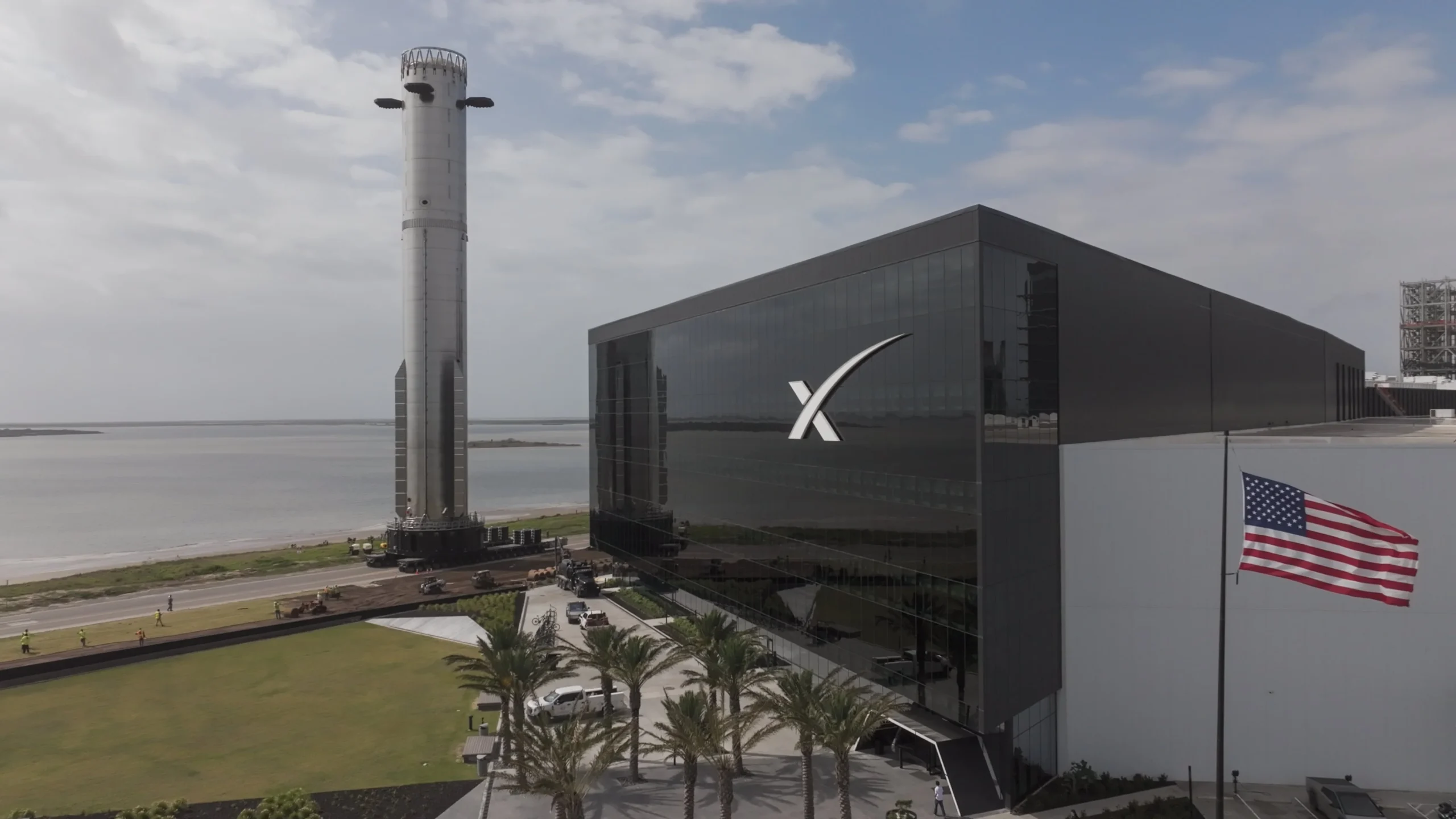
The Physics of Vertical Staging: Why Stacking Matters
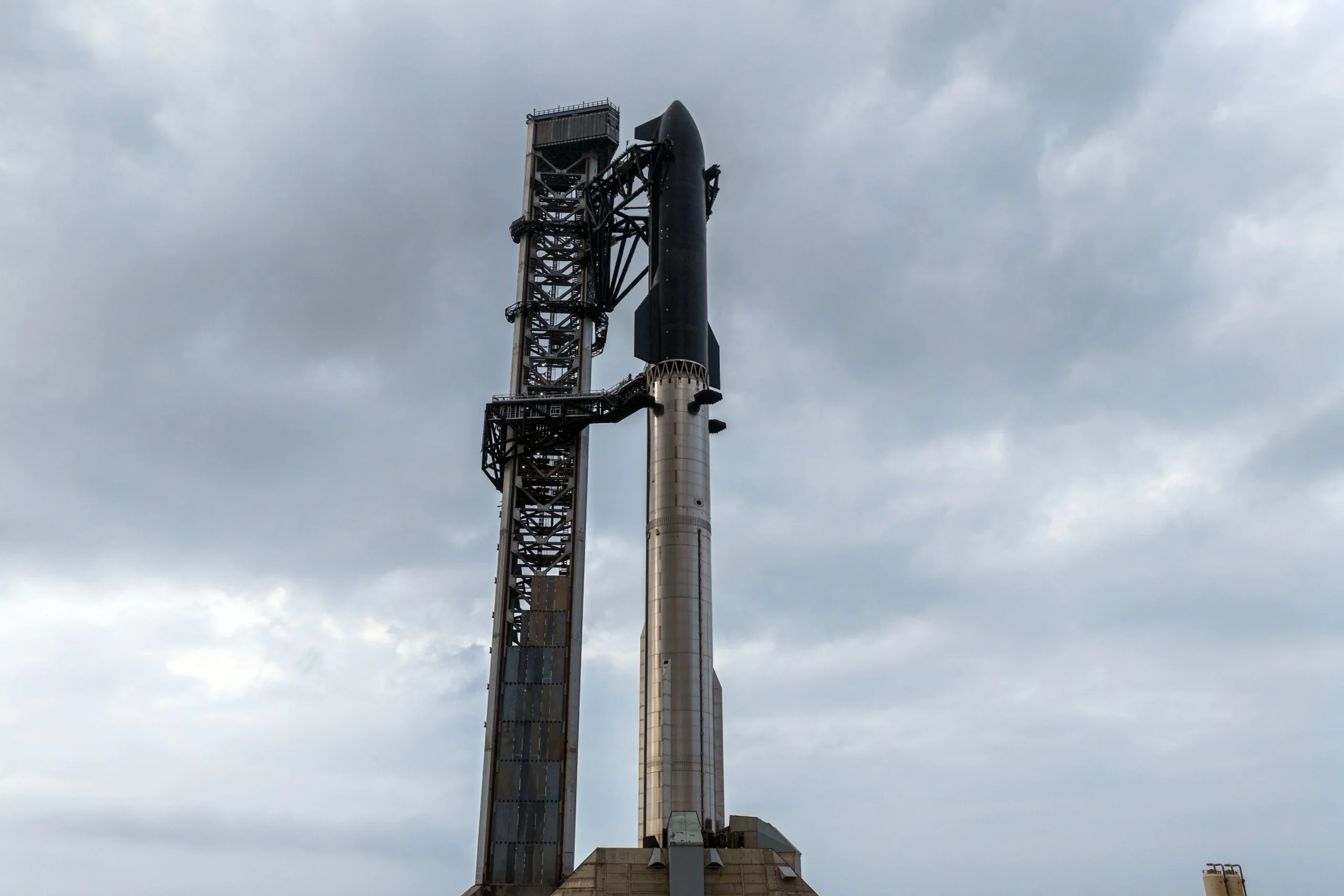
The vertical staging concept is not new—it was pioneered by the Soviet R-7 and later adapted by the Titan family—but SpaceX has taken it to an extreme. In a typical stacked configuration, the upper stage sits directly atop the lower stage, sharing a common thrust structure. The advantages are clear: the lower stage’s engines push through the interstage, transferring thrust directly to the upper stage’s propellant tanks, which act as a structural column. This minimizes bending moments and allows for a lighter overall structure. However, vertical staging also introduces a severe penalty: the upper stage must carry its own engines and propellant during the entire lower-stage burn, meaning the lower stage must lift a significantly heavier payload through the densest part of the atmosphere.
SpaceX’s solution to this penalty is not to avoid vertical staging but to optimize its execution. By using a cluster of 33 Raptor engines on Super Heavy, the company achieves an unprecedented thrust-to-weight ratio, enabling the booster to lift the fully fueled Starship (with its own six Raptor engines) through the atmosphere with minimal gravity losses. The key metric here is the staging velocity: the speed at which the lower stage separates. Higher staging velocity means the upper stage has more initial energy, but it also means the lower stage must carry more propellant and be more robust. SpaceX has systematically tested various staging points through flight experiments, iteratively adjusting the burn profile to maximize the delta-v imparted to the upper stage while leaving enough propellant for the booster’s controlled descent and landing.
SpaceX’s Iterative Design Philosophy: From Falcon to Starship
The lessons learned from Falcon 9’s first-stage recovery directly informed Starship’s staging architecture. Falcon 9 uses a separation system that relies on a brief coast phase and pneumatic pushers to separate the stages, followed by a flip maneuver to orient the booster for its boostback burn. While effective, this method introduces a small but measurable delay between stage separation and upper-stage ignition, during which the upper stage loses velocity due to gravity. For Starship, SpaceX sought to eliminate this delay entirely by implementing a hot-staging approach, where the upper-stage engines ignite while still attached to the lower stage, using the interstage as a blast deflector.
Hot staging is not without its risks—the exhaust plume from the Starship’s Raptor engines must be carefully managed to avoid overheating the Super Heavy’s engine nozzles and thrust structure. SpaceX addressed this by designing a vented interstage that channels the hot gas through a series of ports, dissipating the thermal load and allowing the booster’s engines to shut down gracefully after separation. The company also reinforced the top of the booster with a heat shield grid that protects the critical components during the brief overlap. This innovation reduces the staging gap from several seconds to less than a second, effectively adding hundreds of meters per second to the Starship’s final velocity.
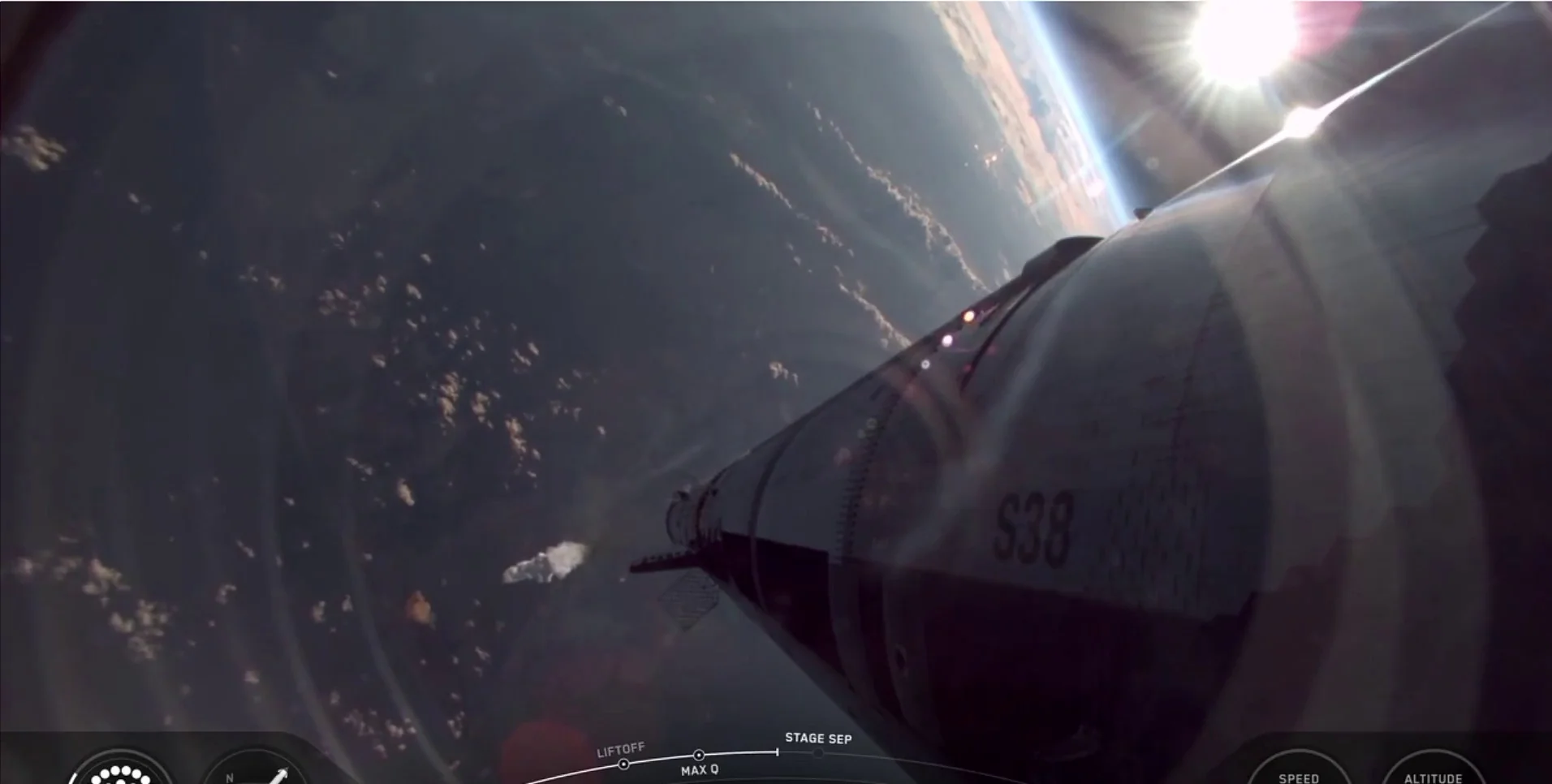
The Hot-Staging Breakthrough: Engineering the Overlap
Hot staging is the cornerstone of SpaceX’s strategy to maximize third-stage mass. By igniting the Starship’s Raptor engines before the booster separates, the upper stage avoids the coast phase entirely, maintaining continuous thrust throughout the transition. The practical benefit is substantial: for a vehicle with a Starship mass of approximately 1,500 tons, every second saved translates to roughly 15 tons of additional payload capacity. Over the course of the flight, this incremental gain accumulates to a difference of several hundred tons of propellant available for the Starship’s trans-lunar or trans-Mars injection burns.
The hot-staging maneuver is also a testament to SpaceX’s advanced flight control algorithms. The separation must be executed with milliradian precision to avoid collision between the two stages. The Super Heavy booster, after experiencing a sudden drop in thrust from the Starship’s engines firing downward, must immediately initiate its boostback burn to reverse its velocity and begin its return trajectory. The timing of these events is coordinated by onboard computers that process telemetry from hundreds of sensors in real time. The result is a choreographed dance that occurs at an altitude of approximately 65 kilometers, where the atmosphere is thin enough to allow for aggressive attitude changes but still thick enough to pose aerodynamic challenges.
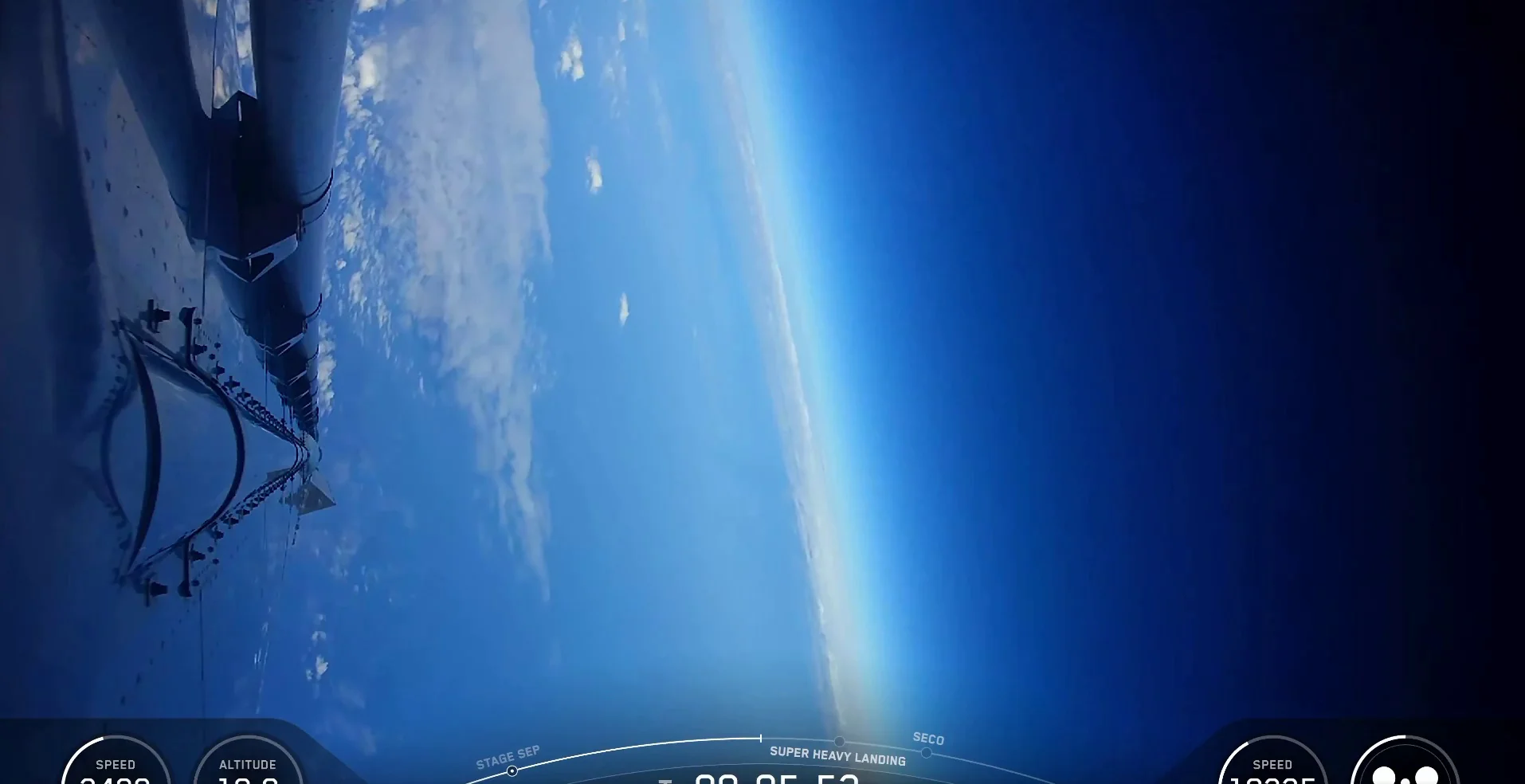
Optimizing the Boostback and Landing: A Symbiotic Relationship
One of the most counterintuitive aspects of SpaceX’s staging strategy is that the booster’s return-to-launch-site capability actually contributes to the third-stage mass optimization. By recovering the Super Heavy booster, SpaceX can afford to design it with a more aggressive flight profile, including a steeper ascent trajectory that reduces gravity losses. The boostback burn, which consumes about 15% of the booster’s propellant, is carefully tailored to ensure the booster lands precisely on the launch tower’s catching arms, a feat that requires exceptional navigation precision.
The choice of landing mode—either on a drone ship or back at the launch site—also influences the staging sequence. A return to launch site requires more propellant for the boostback burn, which reduces the energy available to the Starship. Conversely, a drone ship landing allows for a more aggressive staging velocity, as the booster can coast further downrange before performing its entry burn. SpaceX has experimented with both modes, and the current baseline uses a drone ship landing for high-energy missions to maximize the Starship’s performance. The company has even developed a hybrid approach where the booster performs a partial boostback to a ship stationed downrange, striking a balance between recovery and payload capacity.
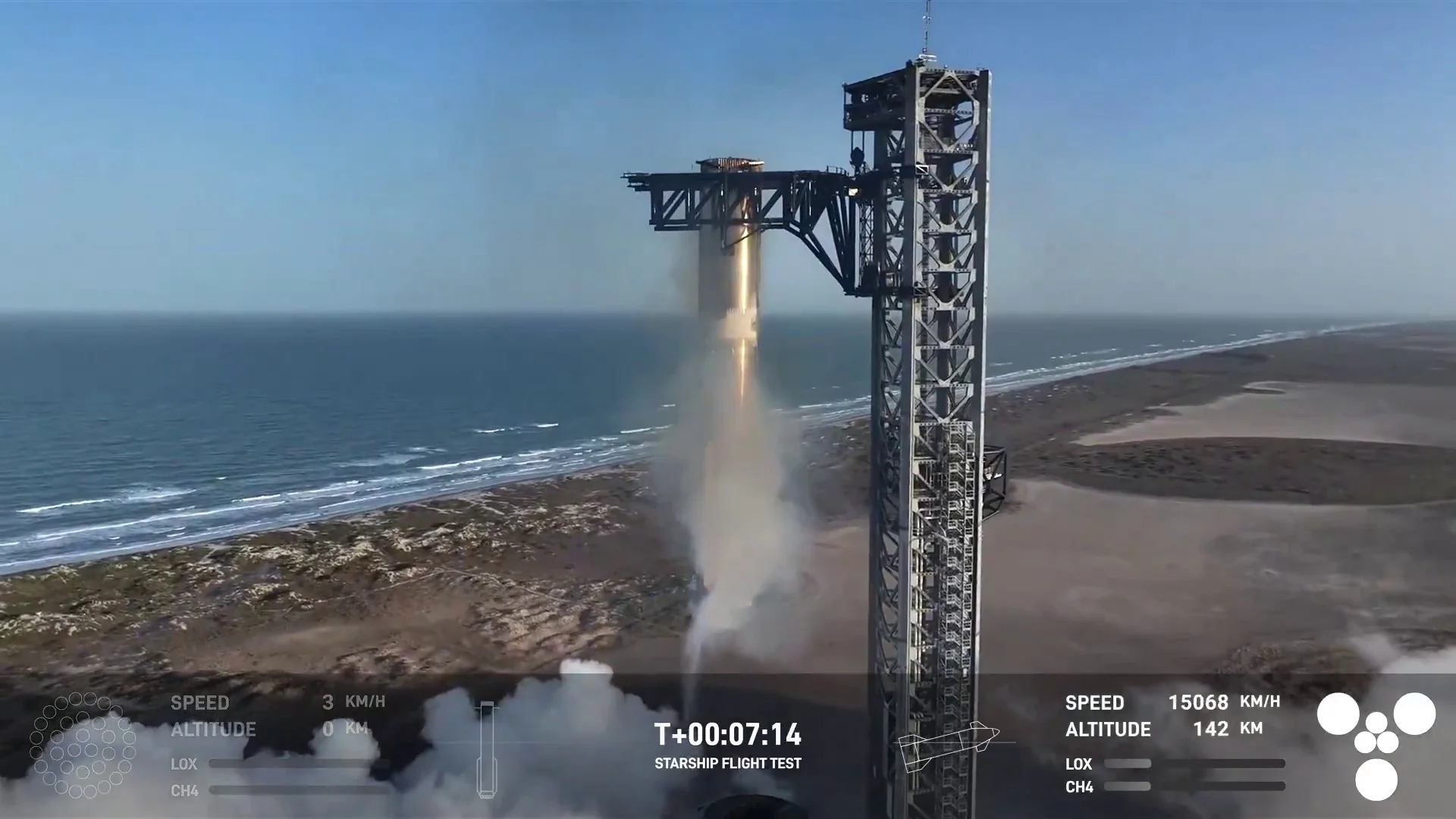
Third Stage Mass Maximization: The Ultimate Payoff
The ultimate objective of all these optimizations is to maximize the mass of the Starship’s third stage—or more precisely, the payload it can deliver to orbit and beyond. The third stage in this context is the Starship itself, which acts as both an upper stage and a long-duration spacecraft. Its dry mass includes the hull, heat shield, engines, and life support systems, leaving a residual mass fraction for propellant and payload. Every kilogram saved in the staging sequence translates directly into additional propellant or cargo that can be carried to the destination.
SpaceX has quantified the gains from its staging optimizations: the hot-staging alone adds approximately 10% to the Starship’s payload capacity to low Earth orbit compared to a conventional coast-staging design. When combined with the optimized ascent trajectory, the improvement approaches 20%. This is a game-changing margin, especially for missions to the Moon and Mars, where every kilogram of payload is precious. For the Artemis program, the Starship Human Landing System (HLS) variant relies on this enhanced performance to land astronauts on the lunar surface and return them to orbit.
Furthermore, the vertical staging architecture enables a modular upgrade path. As Raptor engines continue to evolve (from Raptor 1 to Raptor 2 and now Raptor 3), the increased thrust and improved efficiency further amplify the staging gains.
The interstage design has been intentionally overbuilt to accommodate future engine variants, ensuring that the basic configuration remains valid for years to come. This forward-thinking approach reflects SpaceX’s broader philosophy of building a long-term space transportation system that can be incrementally refined without requiring a complete redesign.
Conclusion: The Art of the Staging Sequence
SpaceX’s vertical staging sequence is not merely a technical novelty; it is the culmination of years of iterative testing, data analysis, and engineering courage. By embracing hot staging, optimizing the boostback trajectory, and continuously refining the interstage design, the company has unlocked a level of performance that was previously thought impossible for a fully reusable launch system. The result is a vehicle capable of delivering unprecedented mass to orbit, paving the way for deep-space exploration and eventually the colonization of other worlds.
As Starship enters regular service, the lessons learned from its staging sequence will inform the next generation of rocket designs. The trade-offs between staging velocity, recovery modes, and upper-stage mass are universal, but SpaceX has shown that with smart engineering, one can have both high performance and full reusability. The vertical staging architecture is a testament to the power of vertical integration and relentless innovation—a story that continues to unfold with each new flight test.
Frequently Asked Questions
Frequently Asked Questions
Why does hot staging improve payload capacity?
Hot staging eliminates the coast phase between stage separation and upper-stage ignition, preventing velocity loss due to gravity. This adds hundreds of m/s to the upper stage’s final velocity, directly increasing the payload mass it can deliver.
How does SpaceX prevent damage to the Super Heavy from the Starship’s exhaust during hot staging?
SpaceX designed a vented interstage with thermal shielding and a grid structure that dissipates the exhaust plume. The booster’s engines are shut down just before the upper-stage engines ignite, and the overlap is measured in milliseconds.
What is the typical staging altitude for Starship and Super Heavy?
The staging point is typically around 65 kilometers altitude, where atmospheric pressure is low enough to allow the upper stage to efficiently use its vacuum-optimized Raptor engines while the booster’s sea-level engines are still providing thrust.
How does the booster’s recovery mode affect the staging sequence?
A return-to-launch-site landing requires more propellant for the boostback burn, reducing the energy available to the upper stage. For high-energy missions, SpaceX often uses a drone ship landing downrange to maximize the Starship’s performance.
Will SpaceX further evolve the staging architecture?
Yes, as Raptor engine variants continue to improve and SpaceX gains more flight data, the staging sequence will be further refined. The company has already tested different staging altitudes and throttle profiles to optimize performance.