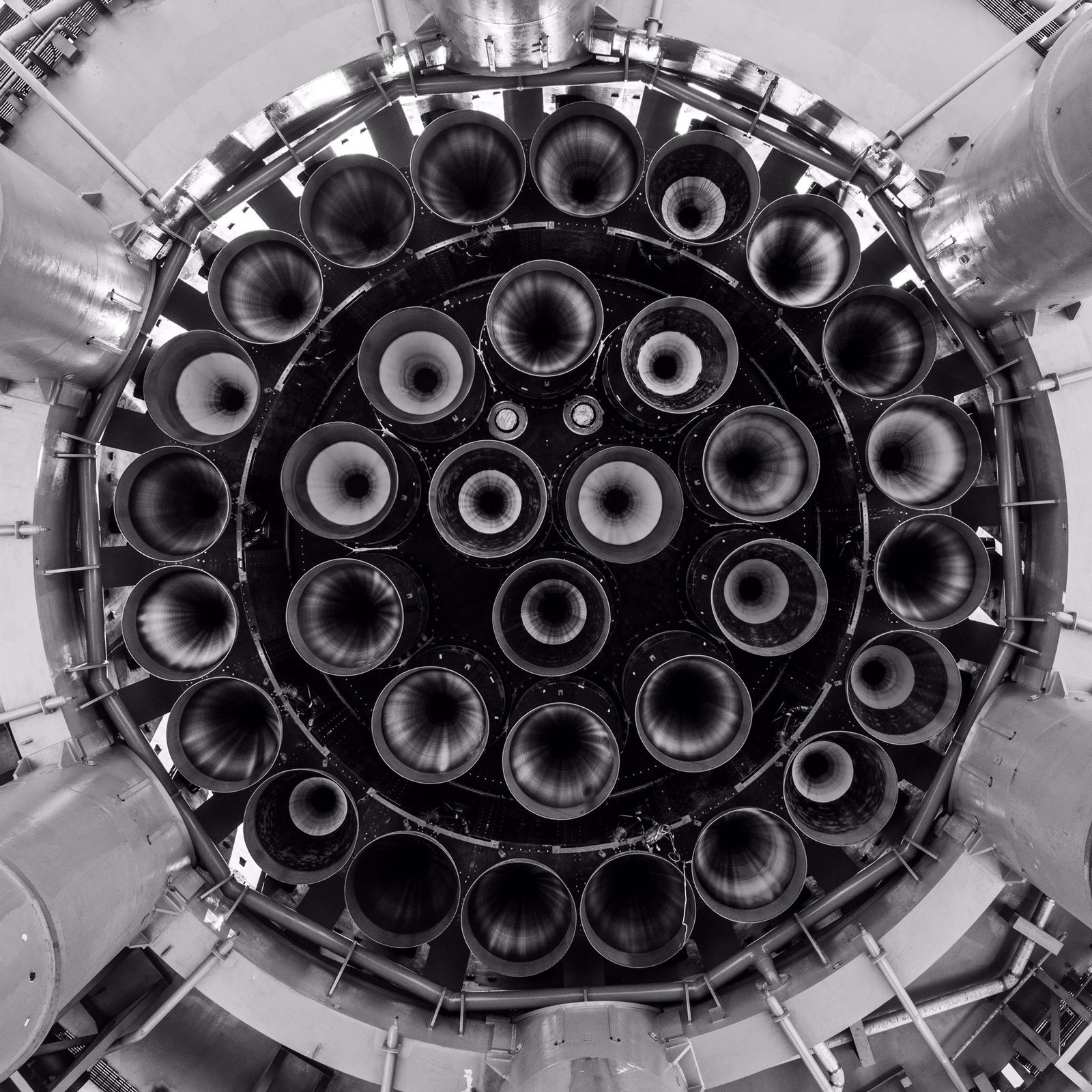

The Thermal Crucible: Why Raptor V3 Demands a Radical Cooling Solution
The Starship V3’s Raptor engine represents the zenith of full-flow staged combustion rocket engineering, delivering an extraordinary 330 tonnes of thrust at sea level. However, this immense power generation comes with a devastating thermal price tag. During full-throttle operation, the engine’s combustion chamber and throat region experience temperatures soaring past 3,500 Kelvin—sufficient to melt even the most advanced aerospace-grade superalloys within milliseconds. The nozzle extension, constructed from a copper alloy known for its exceptional thermal conductivity, would disintegrate almost instantaneously if left unprotected. The solution to this existential thermal threat lies not in brute-force material resistance but in a sophisticated, elegantly engineered thermal extraction mechanism: regenerative cooling.
Regenerative cooling is a thermodynamic strategy that transforms the engine’s own cryogenic propellants into active thermal management agents. Rather than simply pumping fuel and oxidizer through the main injectors, SpaceX routes both liquid methane (CH4) and liquid oxygen (LOX) at cryogenic temperatures—approximately 90 K and 65 K respectively—through a network of precisely machined channels lining the combustion chamber walls and nozzle extension. As these ultra-cold fluids travel through the integrated cooling channels, they absorb intense thermal energy radiating from the combustion core, effectively preventing the metallic structure from reaching its softening point. This process is not merely protective; it is also remarkably efficient. The absorbed thermal energy actually pre-heats the propellants before they enter the combustion chamber, enhancing combustion efficiency and specific impulse (Isp) by facilitating more complete vaporization and mixing.
Channel Geometry and Fluid Dynamics: The Engineering Beneath the Surface
The effectiveness of Starship V3’s regenerative cooling system is fundamentally dictated by the geometry and layout of the cooling channels themselves. Early iterations of the Raptor design employed simple, straight milled channels running parallel to the engine’s longitudinal axis. However, advanced computational fluid dynamics (CFD) simulations revealed that this arrangement produced significant thermal gradients across the chamber wall, creating localized hot spots that compromised structural integrity during extended-duration burns. For the V3 upgrade, SpaceX engineers implemented an optimized curvilinear channel architecture with variable cross-sectional areas and helical routing patterns near the throat region.
The throat section of the nozzle represents the most critical thermal region. At this constricted point, exhaust gases accelerate to supersonic velocities, and the convective heat transfer coefficient reaches its maximum. To address this, the V3’s cooling channels narrow significantly in the throat region, increasing the flow velocity of the cryogenic propellants and correspondingly boosting the convective heat transfer rate. This localized design decision ensures that the maximum thermal flux is met with the maximum cooling capacity. The channel walls themselves feature an innovative micro-ribbed surface treatment that promotes turbulent flow, breaking up the thermal boundary layer that would otherwise form along the channel surfaces and insulate the coolant from the hot metal wall.
Laser-Welded Construction: The Manufacturing Breakthrough
Traditional regeneratively cooled rocket engines, such as the RS-25 engines used on the Space Shuttle, relied on complex tube-wound construction methods where hundreds of individual coolant tubes were brazed or welded together to form the combustion chamber. This approach was labor-intensive, heavy, and prone to manufacturing defects. SpaceX, consistent with its ethos of rapid iterative manufacturing, has pioneered a radically different method for the Starship V3 Raptor engines. The combustion chamber and nozzle assembly are produced using advanced laser-welded slot construction.
In this process, a solid copper alloy forging is precision-machined to create the intricate network of cooling channels. The channels are then sealed by welding a thin, laser-cut Inconel or copper alloy outer jacket directly over the machined surface, using high-power fiber lasers that operate with sub-millimeter precision. This manufacturing technique allows for extreme precision in channel geometry, eliminates the weight penalties associated with multiple tube joints, and dramatically reduces production time. Crucially, the laser welding process induces minimal heat-affected zones in the base material, preserving the copper alloy’s critical thermal and mechanical properties. The result is a lightweight, structurally robust, and highly thermally efficient cooling jacket that can withstand thousands of operational cycles.
Comparative Analysis of Rocket Engine Cooling Methodologies
| Cooling Method | Mechanism | Typical Application | Thermal Management Capability | Key Limitation |
|---|---|---|---|---|
| Regenerative Cooling | Cryogenic propellants flow through channels embedded in nozzle walls. | High-thrust, long-duration engines (Raptor, RS-25, Vulcain) | Extremely high; effectively handles heat fluxes exceeding 50 MW/m². | Complex manufacturing; requires precise channel design. |
| Film Cooling | Boundary layer of coolant gas injected along chamber walls. | Upper stage engines, small thrusters. | Moderate; reduces heat flux by creating insulating gas layer. | Reduces specific impulse; requires additional plumbing. |
| Ablative Cooling | Heat-absorbing sacrificial material layers sublimate and carry heat away. | Single-use boosters, SRBs, experimental motors. | Moderate; limited by material thickness and burn time. | Not reusable; performance degrades over burn duration. |
| Radiative Cooling | Heat dissipation through high-temperature infrared radiation. | Low-thrust, high-altitude engines with extended nozzles. | Limited; relies on high emissivity and large surface area. | Ineffective for high-thrust, high-pressure engines. |
| Transpiration Cooling | Coolant gas flows through porous metal walls, creating a protective film. | Advanced experimental hypersonic engines. | Potentially high; currently limited by material porosity. | Prone to clogging; complex porous material fabrication. |
Thermal Gradients and Structural Integrity: Managing Hot Spots
Despite the advanced cooling architecture, the Raptor V3 engine still experiences significant thermal gradients across the combustion chamber wall. The inner wall surface, directly exposed to the combustion flame, reaches temperatures approaching 1,000 K, while the outer jacket remains near the ambient cryogenic temperature of the flowing propellants. This differential can exceed 900 K across a wall thickness of just 2 to 3 millimeters. Such extreme thermal gradients induce substantial mechanical stresses, creating a condition known as thermal ratcheting, where cyclic expansion and contraction gradually deform the material over repeated engine firings.
To mitigate these structural challenges, SpaceX engineers have implemented a sophisticated material engineering strategy. The combustion chamber wall is fabricated from a proprietary copper-zirconium alloy (similar to C18150) that exhibits exceptional thermal conductivity coupled with high yield strength at elevated temperatures. This alloy’s unique grain structure resists the creep deformation that would normally occur under sustained thermal loads. Additionally, the channel wall geometry is optimized with strategically placed support ribs—small structural bridges spanning the cooling channels—that prevent the thin inner wall from buckling under the immense combustion pressure, which exceeds 300 bar (4,350 psi) in the Raptor V3’s full-flow staged combustion cycle.
Frequently Asked Questions About Raptor V3 Regenerative Cooling
Frequently Asked Questions
Why does SpaceX use methane rather than hydrogen for regenerative cooling?
Methane offers several distinct advantages over liquid hydrogen. While hydrogen has superior specific heat capacity, it is extremely difficult to handle due to its low density, cryogenic temperature, and propensity to cause embrittlement in metals. Methane provides an excellent balance of cooling capacity, density, availability, and compatibility with the full-flow staged combustion cycle. Importantly, methane’s higher molecular weight and density make the cooling channels less susceptible to flow instabilities and allow for more compact channel geometries.
Does the regenerative cooling process reduce the engine’s overall performance?
No, regenerative cooling actually enhances performance. The heat absorbed by the propellants during their passage through the cooling channels raises their temperature from cryogenic levels to near-critical states. This pre-heating effect reduces the energy required for vaporization and combustion, effectively increasing the engine’s specific impulse by 3 to 5 percent compared to uncooled configurations. The overall cycle efficiency is improved because the engine is effectively recovering thermal energy that would otherwise be wasted.
What happens if a cooling channel becomes blocked during operation?
A blocked cooling channel is a catastrophic failure mode. If a channel becomes obstructed, the flow of cryogenic propellant through that specific segment is restricted. The neighboring segment of the chamber wall will rapidly overheat, leading to localized melting or thermal failure. This can result in a ‘burn-through’ event where the combustion gases penetrate the chamber wall, causing immediate loss of engine structural integrity and potentially triggering a vehicle-level failure. To mitigate this risk, the V3 design incorporates redundant channel pathways and extensive pre-flight flow validation testing.